
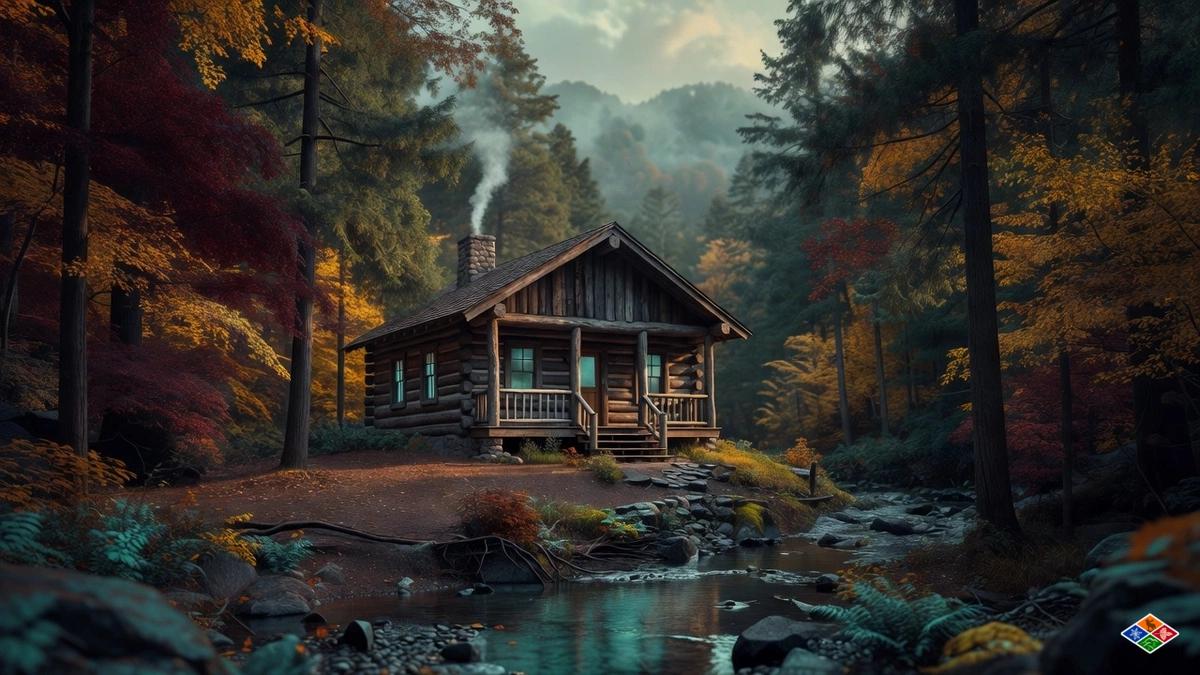
There’s something undeniably magical about escaping the chaos of everyday life and retreating to a cozy cabin in the woods. The crackling fireplace, the sound of rustling leaves, the smell of pine trees all around you. It sounds like a dream, right? Well, in the Smoky Mountains, that dream is very much a reality.
But here’s the thing: not all cabins are created equal. Whether you’re planning your very first mountain getaway or you’re just starting to explore what the Smokies have to offer, knowing what separates a good cabin from a truly perfect one can make all the difference in your trip.
That’s exactly what we’re here to help you with! In this guide, we’re breaking down the key features and qualities that make a cabin in the woods experience truly unforgettable in the Smokies. From must-have amenities to the perfect location, we’ve put together a simple, easy-to-follow list that will help you find exactly what you’re looking for. Get ready to start planning the ultimate mountain escape!
If you’re searching for a true cabin in the woods experience, the Smoky Mountains aren’t just a good option. They’re the best option. Here’s why this corner of East Tennessee consistently delivers what other cabin destinations only promise.
The most visited national park in America is literally in your backyard. Great Smoky Mountains National Park draws millions of visitors every year, making it the most visited national park in the United States. And unlike most national parks, it charges zero admission. What that means for you as a cabin guest is simple: the “woods” surrounding your rental aren’t a marketing stretch. You’re genuinely nestled inside one of the most celebrated natural landscapes in the country, with over 500,000 acres of protected forest as your neighbor.
The forest never really turns off here. The Smokies sit in a temperate rainforest climate zone, which means the tree canopy stays remarkably dense no matter what time of year you visit. Summer visitors find themselves wrapped in layered shades of green. Fall brings a breathtaking color show, and you can get a real sense of that seasonal magic through Elk Springs Resort’s fall foliage guide for Gatlinburg. Even in winter, evergreen understory trees keep the landscape feeling alive and forested rather than bare and exposed.
Gatlinburg is positioned unlike any other cabin town. The city sits at the literal entrance to the national park. That means a cabin just a few miles from downtown restaurants and shops can still feel completely removed from civilization. You get wilderness seclusion without sacrificing convenience, which competing cabin markets like the Poconos or Ozarks simply cannot match at the same ratio.
Wildlife makes it feel genuinely wild. Black bears, white-tailed deer, and wild turkeys are commonly spotted near secluded Smoky Mountain cabins. The National Park Service’s Great Smoky Mountains lodging and visitor resources confirm wildlife viewing as one of the park’s signature experiences. That kind of authentic wilderness encounter is rare, and it’s something guests remember long after checkout.
Not every cabin marketed as a “cabin in the woods” actually delivers that experience. The Smoky Mountains rental market is packed with options, and plenty of listings use woodsy language while sitting in dense rental clusters where you can practically wave to your neighbors from the hot tub. Knowing what separates genuine seclusion from clever marketing will save you from a disappointing trip.
True seclusion has a simple test: can you see another cabin from your porch? If the answer is yes, or if you’re sharing a driveway with three other rental properties, you’re not really in the woods. You’re in a subdivision with trees. Real woodland seclusion means no visible neighboring structures, a private entrance, and the kind of quiet where the loudest sound you hear at night is a creek or the wind moving through the tree canopy above you.
Speaking of which, those physical details matter more than you might think. The three markers worth checking before you book are a full tree canopy overhead, proximity to a creek or stream, and a mountain ridgeline view that tells you you’re in elevated, forested terrain rather than a flat suburban lot with landscaping. Local advice from the Gatlinburg and Pigeon Forge community even flags road access as something to ask about upfront, since genuinely wooded locations sometimes come with steep or unpaved driveways that catch guests off guard, especially in winter.
Here’s the part that surprises a lot of first-time visitors: being deep in the woods doesn’t mean being far from everything. The sweet spot for a Smoky Mountains cabin is feeling completely remote while staying within a 10 to 20 minute drive of Gatlinburg’s restaurants, shops, and Great Smoky Mountains National Park trailheads. That balance is very achievable here.
The other outdated assumption worth dropping is that choosing seclusion means giving up comfort. Modern cabins in the Smokies have completely closed that gap. Heated indoor pools, theater rooms, chef’s kitchens, and game rooms are now common features inside properties that also sit on forested ridgelines next to mountain creeks. You genuinely don’t have to choose one or the other anymore.
Elk Springs Resort is a strong example of how this plays out in practice. The cabins range from one to nine bedrooms and are curated specifically around that seclusion-plus-luxury combination, with creekside locations, wooded ridgeline settings, and amenity packages that go well beyond what most travelers expect from a cabin in the woods. It’s the kind of place where Smoky Mountain cabin rentals and similar properties in the area have pushed the entire market to raise its standards, and guests are the clear winners.
Not every cabin that shows up in a search result actually delivers what the phrase “cabin in the woods” promises. Some sit within eyeshot of three other rental properties. Some have stunning amenities but feel more like a resort complex than a secluded forest retreat. Others genuinely deliver the whole package. After spending time looking at what separates the memorable stays from the disappointing ones across the Smoky Mountains market, seven traits consistently show up in the best properties. If a cabin checks all seven of these boxes, you’ve likely found something worth booking.
This is the one that matters most, and it’s also the hardest to verify from a listing page. Genuine tree seclusion means the property is physically surrounded by forest, with no neighboring cabins visible from the deck, the hot tub, or the main living areas. It’s not just about having trees nearby. It’s about the trees creating a natural enclosure that makes you feel like you’re the only people for miles.
This concern comes up constantly in real traveler conversations. In a Facebook group for Pigeon Forge and Gatlinburg visitors with over 460,000 members, a traveler posted asking specifically for a cabin that was “secluded, with an outdoor hot tub, mountain view” and added “I do not want to have another cabin right next to me or in my view.” That post received 159 comments from other travelers trying to help. One commenter put it plainly: “The cabin rental companies pack them in.” That’s a real and accurate warning. Large-scale operators with hundreds of properties on their roster tend to cluster inventory in cabin communities where seclusion is more of a marketing word than a physical reality.
When you’re evaluating a cabin, look at satellite view images if they’re available, ask the property manager directly how close the nearest neighboring cabin is, and specifically ask whether any neighboring cabins are visible from the outdoor spaces. If the person answering your question can’t give you a specific, confident answer, that tells you something important about how well they know their properties.
True immersion in a woodland setting doesn’t stop at the tree line. The best cabins in the Smoky Mountains also offer layered ridgeline views from the primary living spaces, giving you the feeling of elevation and wilderness even when you’re sitting on the couch or eating breakfast at the kitchen table. This combination of forest seclusion and open mountain views is specific to the Appalachian topography of the Smokies, where properties can sit nestled among trees on a ridge while still capturing sweeping views of the valley and the blue-tinted ranges beyond.
Top-rated cabin listings across the Great Smoky Mountains area consistently highlight floor-to-ceiling windows and interior views as major selling points. Guests rate these features highly because the view becomes part of the experience 24 hours a day, not just when you step outside. In the morning it’s fog rolling through the ridges. In the evening it’s the sun dropping behind the mountains. At night it’s a sky full of stars uninterrupted by city light. A cabin without these views is still a cabin, but a cabin with them is genuinely a different level of experience. When you’re browsing listings, prioritize photos taken from inside the living room or kitchen looking outward, not just exterior shots of the cabin itself.
A simple cabin in the woods with nothing but beds and a porch is a fine escape. But the cabins that guests rave about, return to, and recommend to friends are the ones where you never actually feel the need to leave. Heated indoor pools, game rooms, theater rooms, and outdoor hot tubs transform a secluded property into a self-contained retreat where the amenities match the setting.
This is the standard that properties at Elk Springs Resort are specifically built around. A heated indoor pool means you’re swimming regardless of weather or season. A theater room means movie night is an event, not an afterthought. A game room keeps everyone entertained across all ages and energy levels, whether you’re traveling with kids, hosting a multi-family reunion, or bringing a group of friends together for a long weekend. These amenities matter even more in a secluded setting because they remove any pressure to drive into town just to find something to do. The property becomes the destination, and the surrounding wilderness becomes the backdrop.
When you’re comparing cabins, make a list of the specific amenities your group actually uses and check each one carefully. “Game room” can mean a single foosball table or a full arcade-style setup with multiple games. “Theater room” can mean a large-screen TV in a dark room with reclining seats or just a television on a wall. Ask follow-up questions until you understand exactly what’s included.
One of the genuine advantages of staying in the Gatlinburg area is how close you can be to Great Smoky Mountains National Park, which is consistently the most visited national park in the entire country. Trails like Alum Cave and Laurel Falls are within approximately 20 to 30 minutes of most well-positioned Gatlinburg cabins, meaning you can wake up in total seclusion, hike through old-growth forest by mid-morning, and be back at your cabin with your feet in a hot tub before lunch.
The key is finding a property that gives you this access without placing you inside the tourist corridor itself. The strip areas around Gatlinburg and Pigeon Forge are full of activity, which is great for some parts of a trip, but they’re also full of traffic, road noise, and neighboring development that works directly against the seclusion you came for. Travelers planning Smoky Mountain trips frequently recommend the quieter back roads and ridge communities outside the main corridors specifically because they deliver park access without the congestion. Look for cabins that describe themselves as being in the hills above Gatlinburg rather than adjacent to the main commercial areas. That geographic distinction often makes the difference between a retreat and a roadside rental.
Here’s something that doesn’t show up in most cabin marketing materials but comes up constantly among real travelers: how do you actually get there? Road conditions to secluded cabins in the Smokies range from smooth paved private lanes to steep gravel switchbacks that require a high-clearance vehicle and some nerve. For most guests, neither extreme is a dealbreaker on its own. What becomes a problem is finding out the details after you’ve already booked.
Road access concerns were specifically flagged in traveler discussions around secluded cabin bookings, with multiple commenters asking about road conditions as a key pre-booking question. Before you finalize any reservation for a secluded cabin, ask the property manager directly: Is the road paved or gravel? What is the approximate grade at the steepest point? Are low-clearance vehicles like sedans manageable, or is an SUV or truck recommended? Is the road maintained in winter conditions if you’re traveling in December through February? A good property manager will know the answers to these questions without hesitation. If they’re vague or have to look it up, take that as a cue to dig deeper before committing.
This is especially important if you’re traveling with older guests, guests with mobility considerations, or anyone towing a trailer or driving a vehicle with low clearance. Getting this information in advance costs you a five-minute phone call. Discovering the road situation on arrival costs you the first night of your trip.
The best cabin in the woods for a couple celebrating an anniversary looks completely different from the best cabin for a family reunion with 18 people across four generations. Scale matters enormously, and the top properties in the Smoky Mountains market are built to serve the full range. Romantic one-bedroom cabins with a loft, a hot tub, and a fireplace are a completely different product from a nine-bedroom mountain lodge with multiple living areas, a commercial-grade kitchen, and enough outdoor space for a crowd.
Elk Springs Resort specifically offers this full range, from one-bedroom retreats to nine-bedroom cabins, which matters because group sizes change from trip to trip. A couple who books a two-bedroom cabin for a quiet winter getaway might return the following summer with both of their extended families and need seven bedrooms with a game room that can actually keep everyone occupied. Having a property manager who can match you to the right property across that full spectrum means you’re not starting your search from scratch each time. It also means the manager has genuine experience with all the different ways people use these spaces, which produces better recommendations.
When you’re calculating space for your group, don’t just count bedrooms. Look at the number of bathrooms, the layout of the common areas, the size of the dining setup, and the outdoor spaces. A cabin with seven bedrooms but one dining table that seats eight is going to create friction for a group of 20 people at mealtimes.
This last point ties all the others together. A property manager who personally knows their inventory can answer every question raised in points one through six with specific, confident information. They know which cabins have true seclusion and which ones only feel secluded in the listing photos. They know which roads get tricky in wet weather. They know which mountain views are seasonal and which ones are year-round. They know which properties sleep 10 comfortably and which ones technically sleep 10 but feel cramped past six.
That level of knowledge is genuinely harder to maintain when an operation scales to hundreds of properties. A company managing 400 or more cabins across multiple markets is operating a logistics business as much as a hospitality one. The personal inspection and firsthand familiarity that produces real answers to real questions becomes diluted at that scale. Elk Springs Resort received a direct personal recommendation from a recent guest in a travel community specifically citing the quality of service, the kind of firsthand endorsement that reflects a smaller operation with genuine accountability for each property they represent.
When you’re evaluating property managers, treat the pre-booking conversation as a test. Ask specific questions. Ask how far the nearest neighboring cabin is from the deck. Ask what the road surface is like. Ask whether the indoor pool is currently operational. The answers you get, both in content and in confidence, will tell you whether you’re dealing with someone who knows what they’re renting you or someone who’s working from a database entry. That difference has a direct impact on whether the trip matches the promise.
One of the most compelling reasons to book a cabin in the woods in the Smoky Mountains is that you’re essentially booking four completely different experiences depending on when you go. The forest doesn’t stay still here. It transforms dramatically with every season, and each transformation creates its own version of that picture-perfect wooded escape.
If you’ve ever seen fall foliage photos from the Smokies and thought they looked too good to be real, they’re not. The Smoky Mountains produce one of the most celebrated fall foliage displays in the entire eastern United States, with peak color typically arriving in mid-October and painting the surrounding forest in deep reds, burnt oranges, and rich golds. When you’re staying in a wooded cabin during this window, that color show isn’t something you drive to. It’s literally surrounding your deck, wrapping your view from every window, and reflecting off the mountain ridgelines in the distance. Daytime temperatures in the 60s make it ideal porch weather. This is the season that inspires people to type things like “cabin in the woods fall foliage Smoky Mountains” into a search bar and immediately start planning a trip.
Winter is where a wooded cabin in the Smokies surprises most first-time visitors. Once the deciduous trees drop their leaves, the dense forest canopy that hid the mountains all summer suddenly opens up. Ridgelines and long-range views that were completely invisible in July are now fully exposed from your cabin deck. Add a dusting of snow on those ridges and you’ve got the most storybook version of a cabin in the woods imaginable. Temperatures hover near freezing at elevation, which is exactly when a heated indoor pool stops being a bonus amenity and starts being the entire reason you booked. Sliding into warm water while snow falls outside the windows through bare winter trees is an experience that’s genuinely hard to describe until you’ve done it. Winter crowds at the park also thin considerably, which means the seclusion factor around your cabin feels even more pronounced.
Spring in the Smokies isn’t just green returning to the trees. It’s an active wildflower season that typically peaks from late March through May, with trillium, wild azalea, and dogwood blooming across the forest floor in waves. When you’re staying in a secluded wooded cabin during this season, the landscape around you feels genuinely alive in a way that’s different from any other time of year. Mild temperatures in the 50s and 60s make hiking to wildflower corridors and returning to your cabin deck feel effortless. Spring is also a quieter booking window than fall or summer, which can work in your favor if you want maximum seclusion without maximum competition for dates.
Summer often gets overlooked for cabin stays because people assume the heat follows them from the city. It doesn’t, not really. The Smokies’ higher elevations and dense summer canopy create genuine natural cooling that cities in the surrounding region simply can’t match. Creek-side cabin locations take this a step further, where the sound and temperature of moving water nearby keeps the whole environment noticeably cooler than an inland property. July is technically the park’s busiest month for visitors, but when you’re tucked into a wooded cabin with a private outdoor space, you’re removed from most of that noise. Summer also brings the lush, deep-green version of the forest that locals describe as one of the most visually distinct seasonal looks the Smokies offer.
No matter when your schedule opens up, a Smoky Mountain cabin in the woods gives you something worth showing up for. The question is really just which version of the experience you want most.
The phrase “cabin in the woods” means something genuinely different depending on who’s searching for it. A couple planning a romantic getaway has completely different priorities than a family of six or a group of twenty friends celebrating a milestone birthday. Here’s a breakdown of how this experience shapes up for each type of traveler.
When couples type “cabin in the woods” into a search bar, they’re almost always chasing one thing above everything else: seclusion. Not just a quiet neighborhood, but a property where you genuinely can’t see or hear another soul. The amenity stack that defines this experience is pretty consistent across the board: a private hot tub, a wood-burning or gas fireplace, and a deck that looks out into actual trees rather than a parking lot or another cabin’s back porch. A one or two bedroom cabin hits the sweet spot here because it’s intimate without feeling cramped, and the smaller footprint typically means the property is tucked deeper into the woods rather than placed along a busy access road. If a romantic getaway is what you’re after, the best Wears Valley secluded cabin rentals offer exactly this kind of private, wooded retreat that couples are searching for.
Families with children need a cabin that delivers two things simultaneously: outdoor privacy and indoor entertainment. The outdoor seclusion piece matters because parents don’t want to be policing their kids around shared resort pools or worrying about noise complaints from neighboring units. But kids also need to burn energy, and that’s where a well-equipped cabin interior earns its keep. Game rooms, bunk bed lofts, and dedicated play spaces mean the cabin itself becomes the destination, not just a place to sleep between theme park visits. A private outdoor space, whether that’s a fire pit, a wooded yard, or a covered deck with mountain views, gives families room to breathe without ever leaving the property.
Family reunions, birthday trips, and multi-couple getaways are consistently underserved in cabin content, which is surprising given how compelling the value proposition actually is. Think about it this way: splitting a nine-bedroom cabin among eighteen people often costs less per person than booking nine separate hotel rooms, and you get a shared common space, a private setting, and a real experience rather than a corridor full of identical doors. Large group cabins in the Smoky Mountains fill up fast for peak holiday windows, so booking several months in advance is genuinely important for groups traveling in December or over spring break.
An emerging group of “cabin in the woods” searchers isn’t on vacation at all, at least not entirely. Remote workers and worcation travelers are actively seeking cabin settings because the combination of natural surroundings and genuine quiet makes focused work easier than a busy home or a generic hotel. Strong WiFi, a comfortable workspace, and a setting that rewards stepping outside between calls makes a wooded cabin a surprisingly productive home base.
What makes a curated collection like Elk Springs Resort’s inventory particularly useful is the range it covers without forcing you to compromise on setting. From a honeymoon one-bedroom tucked into the trees to a nine-bedroom reunion cabin with room for the whole family, every option sits within the same wooded, secluded environment. That means one search, one phone call, and the right cabin for your group without bouncing between platforms or settling for something that’s almost right.
Finding a cabin that actually matches its listing description takes a little homework before you hit the “book now” button. The good news is that a few targeted questions and smart booking habits will save you from showing up to a “secluded retreat” that overlooks a parking lot full of neighboring rentals.
Before committing to any cabin, call or email the property manager and ask three specific things. First, ask how many neighboring cabins are visible from the property’s deck or main living areas. Second, ask about the road surface and grade leading to the cabin, specifically whether it requires all-wheel drive or has steep sections that could be difficult in rain or snow. Third, ask how many vehicles can park on-site. These three questions cut straight through vague listing language. A property manager who answers confidently and in detail is a good sign. One who hedges or redirects you to the photos is telling you something important.
Listing photos are curated for maximum appeal, and that curation is intentional. The photographer shoots from the best angles, in the best light, and frames out anything that doesn’t support the story the listing is trying to tell. That means the gravel road with the ruts, the neighboring roofline visible through the trees, and the tight driveway that barely fits two cars are unlikely to make the gallery. Direct communication with the property manager fills in those gaps in ways that scrolling through photos simply cannot. Think of the photos as a highlight reel and the conversation as the full game tape.
Booking directly with a property management company instead of routing through platforms like VRBO or Airbnb typically saves you 10 to 15 percent on the total cost of your stay. On a week-long trip, that difference can be meaningful, and the savings only grow with longer bookings. Beyond the money, booking direct connects you immediately to the team that actually manages the property. If you have questions about road access before your arrival or need something handled quickly during your stay, you are talking to the people with the answers and the authority to act. Industry voices have increasingly flagged the danger of OTA dependence from both the operator and guest perspective, and the direct booking movement continues to grow in 2025 and 2026 as a result.
Elk Springs Resort offers a Book Direct and Save program specifically designed to reward guests who skip the third-party platforms. Savings from the program can be applied toward longer stays or upgraded cabin tiers, which is a practical way to get more cabin for the same budget.
Star ratings are a starting point, not a conclusion. A cabin can have a four-and-a-half star average while still having a bumpy unpaved road, audible neighbors on a Saturday night, or a steep driveway that surprised guests with small cars. The reviews that actually tell you what you need to know are the ones that mention road conditions by name, comment on how close other cabins felt, or describe wildlife activity on the property. A note about seeing a black bear from the deck, for example, confirms that the surrounding woods are genuinely wild. Searching the written reviews for keywords like “road,” “neighbor,” “noise,” or “wildlife” will reveal patterns that no amenity checklist ever could.
The perfect cabin in the woods experience comes down to one thing: reality matching the dream. You pictured waking up surrounded by trees, hearing nothing but birdsong, and stepping onto a deck with a mountain view stretching out in front of you. The Smoky Mountains actually deliver that. Dense Appalachian forest, four-season beauty, and proximity to the most visited national park in the country make this region unlike anywhere else in the Southeast.
Elk Springs Resort was built around exactly this kind of experience. The curated collection of one to nine bedroom cabins is selected specifically for tree coverage, seclusion from neighboring properties, and mountain views, then stacked with premium amenities like heated indoor pools and theater rooms so you never have to choose between privacy and comfort. Whether you are planning a couples getaway or a full family reunion, there is a cabin sized for your group.
Browse the secluded cabin options and book directly through the resort website to access the best available rates on your stay.
 Luxury Gatlinburg Cabin Rentals with Private Indoor Pools
 Pet Friendly Cabins in Gatlinburg: Luxury Stays for You and Your Dog
 Best Romantic Cabins in Gatlinburg
 The Ultimate Guide to Wedding and Event Cabins in the Smoky Mountains (2026)
 The 7 Best Waterfalls in the Great Smoky Mountains
 Best Places to Visit Near Gatlinburg and the Smoky Mountains
