
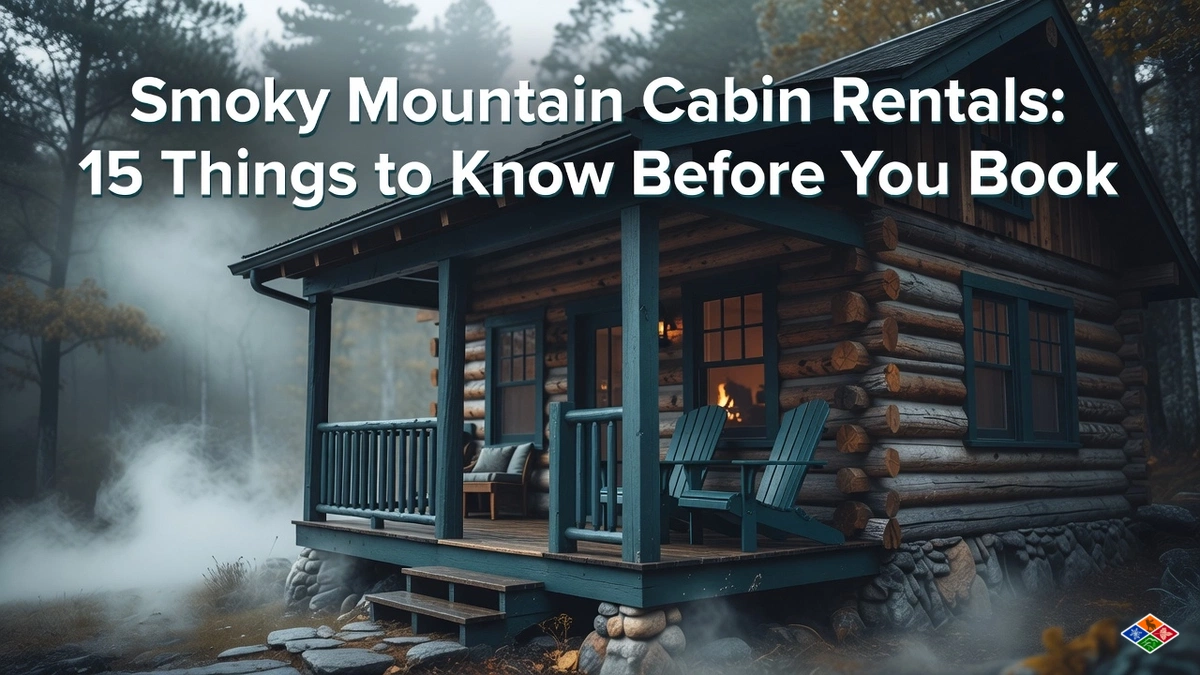
Picture this: you’re sitting on a wooden porch, wrapped in a cozy blanket, watching the morning mist roll over the mountains while sipping your favorite coffee. Sounds like the perfect getaway, right? That dream is closer than you think, and smoky mountain cabin rentals make it completely possible.
But here’s the thing, booking a cabin for the first time can feel a little overwhelming. There are so many options, hidden fees to watch out for, and details that first-timers often overlook. The last thing you want is to show up unprepared or feel like you left money on the table.
That’s exactly why we put together this guide. Whether you’re planning a romantic couples retreat, a family vacation, or a fun trip with friends, we’ve got you covered. In this post, you’ll discover 15 important things to know before you book your Smoky Mountain cabin rental. From choosing the right location to understanding what amenities are included, these tips will help you plan a trip that goes smoothly from start to finish. Let’s dive in!
If you’ve ever wondered why the Smokies feel like everyone’s favorite destination, the numbers tell the whole story. Great Smoky Mountains National Park welcomes over 12 million visitors every single year, making it the most visited national park in the entire United States. That’s more foot traffic than the Grand Canyon and Yellowstone combined. For you as a traveler, this means one very important thing: the cabin rental market here is strong, stable, and full of great options no matter when you decide to visit.
One of the biggest surprises for first-time Smokies visitors is discovering that there is genuinely no off-season here. Every season brings its own crowd and its own magic. Summer draws hikers and families looking to cool off on the trails. Fall foliage season (typically mid-October) is arguably the most spectacular, with leaf-peepers flooding the area. Spring brings stunning wildflower blooms that rival anything you’ll find in the country. Even winter has its fans, with snow-dusted mountain views and cozy cabin fireplaces creating a postcard-worthy retreat.
Staying in a cabin isn’t a quirky alternative to a hotel anymore. The global vacation rental market hit $174.84 billion in 2025, and cabin popularity has grown 80% since the pandemic. Travelers of all ages have embraced this style of accommodation, and 81% of Gen Z travelers have already stayed in a cabin or vacation home. Cabins offer space, privacy, and amenities that traditional hotels simply can’t match.
Understanding peak versus shoulder season helps you stretch your budget and avoid the biggest crowds. Peak demand in the Smokies consistently runs from July through October, so booking early during these windows is essential. If flexibility is your friend, January through March offers lower rates and quieter trails without sacrificing the mountain charm that makes this destination so special.
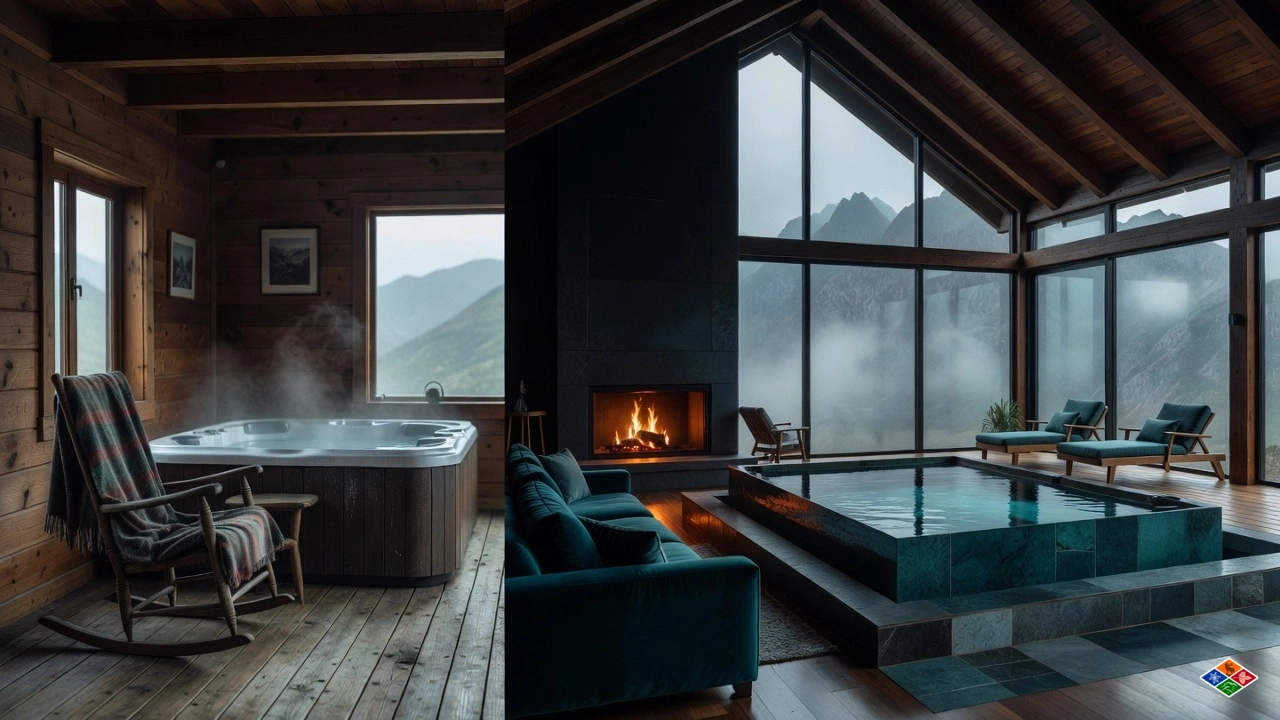
Most travelers picture a smoky mountain cabin rental as a cozy wood-paneled room, a hot tub on the deck, and maybe a rocking chair with a decent view. That version exists, and it’s perfectly fine for a quick getaway. But luxury cabins operate in an entirely different category, and the gap is bigger than most people expect before they start searching.
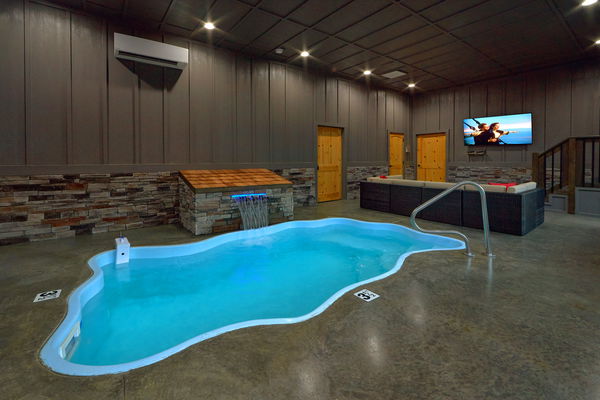
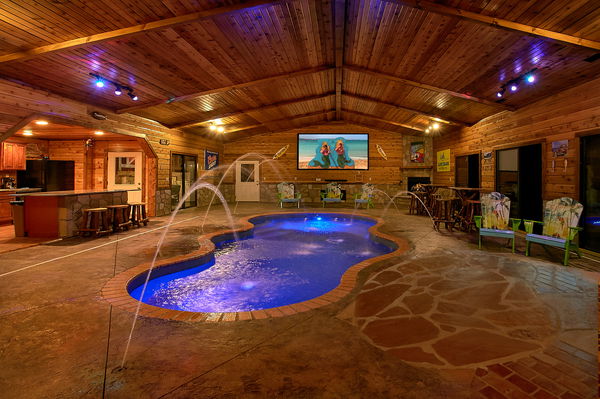
The amenity difference starts with what’s actually built into the property. A luxury cabin in the Gatlinburg area might include a private indoor heated pool, a dedicated theater room with stadium seating, and a multi-level game room loaded with arcade games, pool tables, and shuffleboard. These features aren’t afterthoughts or add-ons. They’re architecturally designed into properties that often run 6,000 to 9,000 square feet, compared to the 2,000 to 3,000 square foot footprint of a typical standard rental. That size difference is what makes those amenities physically possible.
Location is just as important as what’s inside. A true luxury cabin sits on a private ridge where your view is mountains, not your neighbor’s back porch. Seclusion is treated as a searchable feature at this tier, not a bonus. If neighboring cabins are visible from your hot tub, it doesn’t meet the privacy standard that luxury guests expect and pay for.
The interior experience has also shifted significantly. Guests today want high-end furnishings, resort-quality bedding, and fully equipped kitchens with professional-grade appliances, all inside a space that still genuinely feels like a mountain retreat. This “luxury rustic” blend is now the expectation, not a premium upgrade.
Cabins managed by a dedicated property management company also tend to deliver more consistency across all of these areas, from professional cleaning standards to reliable guest support throughout your stay. Elk Springs Resort cabins are built specifically around this tier, with theater rooms, indoor heated pools, game rooms, and secluded mountain settings available across a 1 to 9 bedroom inventory, so you get that full experience whether you’re booking a couples’ retreat or a large group trip.
Here’s something that catches most first-time cabin bookers completely off guard: the more bedrooms you rent, the less you often pay per person. That sounds backwards until you run the actual numbers.
Let’s start with what the market data tells us. A 6-bedroom cabin in Gatlinburg generates around $138,630 per year in rental revenue, compared to just $36,187 for a 2-bedroom property. That’s a 3.8x revenue gap, and it exists because guests are genuinely willing to pay a premium for larger, amenity-loaded properties. But here’s the twist for the guest sitting on the other side of that equation: that premium gets divided among so many more people that your individual share often drops dramatically.
Consider a 9-bedroom cabin priced at $900 per night. Split that among 18 guests and you’re looking at $50 per person, per night. For context, a mid-range hotel room in most U.S. markets runs $120 to $180 per night for two people. The cabin wins, and it wins by a wide margin.
The math gets even more interesting when you factor in shared amenities. One indoor heated pool, one theater room, and one game room serve the entire group under one roof. If that same group of 18 tried to book multiple smaller cabins instead, they’d pay more per person, deal with separate check-ins, separate deposits, and separate everything. Nobody ends up in the same place at the same time, and the whole point of a group trip gets lost somewhere in the logistics.
According to a detailed Smoky Mountain cabin cost guide, the 4 to 5 bedroom range tends to hit the sweet spot for groups of 10 to 18, while 8-plus bedroom properties serve reunions and larger gatherings at peak per-person efficiency. If you’re planning a multi-generational family reunion, a bachelorette weekend, or a group birthday trip, run the cost-per-person calculation before automatically booking two or three smaller units. The single large cabin almost always comes out ahead on both price and experience.
For couples and small families, 3 to 4 bedroom cabins offer the most consistently available inventory and the most stable pricing year-round. They represent the reliable, no-surprises end of the spectrum. But if your headcount is climbing past 8 or 10, the 5 to 9 bedroom options are where the real value lives, and where amenities like private indoor pools become genuinely affordable once divided among everyone staying.
Most people write off winter and shoulder season in the Smokies without a second thought. Summer and fall get all the attention, but here’s what those travelers are missing: winter in the Smoky Mountains is genuinely stunning, crowds shrink dramatically, and the cabin experience itself becomes something much more special. Trails that see thousands of visitors in October can feel nearly deserted on a February morning. That shift alone changes the entire trip.
The amenities inside a luxury cabin do a lot of the heavy lifting in colder months, and that’s where things get interesting.
A private indoor heated pool takes a cold-weather stay from “cozy retreat” to full resort experience. No hotel in the Gatlinburg area offers that same combination of privacy and aquatic amenity under one roof. Families with young kids, groups of friends, or couples looking to unwind after a chilly hike can slip into warm water without bundling back up or sharing a pool with strangers. It’s a genuinely different experience.
When the temperature drops or rain rolls in, having a private theater room changes everything. Groups can settle in for a movie night, catch a live sports event, or connect a gaming console without ever leaving the cabin. Game rooms with billiards tables and other setups serve the same purpose. These aren’t just bonus features; they’re the reason a two or three-night trip feels fully satisfying even if the weather doesn’t cooperate.
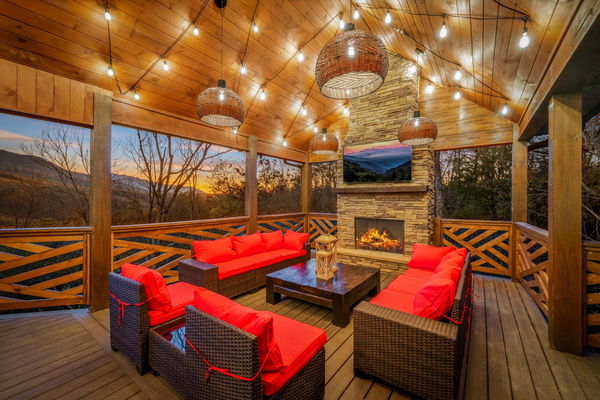
A gas fireplace becomes the centerpiece of a winter stay in a way it simply isn’t in July. Pair that with a covered deck hot tub and a clear mountain view dusted with snow, and seclusion stops feeling like a trade-off. It becomes the entire point of the trip. The best Smoky Mountain vacation rentals stack these amenities intentionally, and in winter they deliver maximum impact.
Shoulder season, running roughly January through March and late October through November, offers the most cabin availability and the most competitive nightly rates of the year. Peak summer weeks in Gatlinburg can book out 10 to 14 weeks in advance. Shoulder season flips that equation entirely, giving travelers more flexibility, better pricing, and access to larger luxury cabins that would otherwise be snapped up fast. Combined with the indoor amenity stack described above, these months genuinely represent the best overall value the Smokies offer.
There is a reason guests remember the view long after they forget the thread count on the sheets. Standing on a private deck at sunrise, coffee in hand, watching morning fog roll through the valley below is not just a nice moment. It is the moment. It becomes the photo on the phone, the story at the office, the reason they start planning the next trip before they even check out. View-facing properties in the Smokies consistently outperform comparable cabins on booking rates and guest review scores, and that gap is not a coincidence. The setting itself does the emotional heavy lifting that no interior upgrade can replicate.
Not all seclusion is created equal, and this is worth understanding before you book. A cabin can be marketed as “private” and still sit within clear sight lines of three neighboring decks. True seclusion has specific characteristics: a private driveway that separates your arrival experience from shared lots, natural tree cover or ridge positioning that blocks neighboring structures from view, and no shared parking areas where strangers are walking past your door. Real travelers searching for secluded Smoky Mountain stays flag this distinction immediately, and many arrive expecting one thing only to find another.
There is also a social dimension to this that younger travelers feel particularly strongly. An 81% share of Gen Z travelers have already stayed in a cabin or vacation home, and that generation books with visual storytelling in mind. A dramatic mountain sunrise from a private deck is not just a pleasant experience; it has real social currency. That single morning moment can generate the kind of authentic content that influences bookings for the property long after the guest leaves.
The part that does not get said enough is that location is genuinely non-transferable. A luxury cabin amenities comparison can document every upgrade inside a property, but no renovation can move a cabin from a roadside strip to a ridgeline. Interior quality matters, and it matters a lot in the current market. But a ridgeline setting with unobstructed valley views is a fixed asset that development pressure in Sevier County is steadily making harder to find. Our cabins at Elk Springs Resort are positioned specifically for this combination of mountain views and genuine privacy, in secluded settings that cannot be built from scratch once the surrounding land is developed.
One of the first decisions you’ll make when planning your Smokies trip is picking a home base, and it matters more than most people expect. Each area has a distinct personality, and the right fit depends entirely on how you want to spend your days.
Gatlinburg sits right at the entrance to Great Smoky Mountains National Park, which makes it the natural choice for guests whose itinerary centers on hiking, wildlife watching, or simply being close to the mountains. Beyond park access, the town itself offers a genuinely walkable downtown filled with local restaurants, craft distilleries, and art galleries. You can finish a morning hike and walk to lunch without ever getting back in your car. That combination of outdoor access and on-foot culture is hard to beat if you want the full Smokies experience without sacrificing convenience.
Pigeon Forge plays a completely different role. It is a high-energy entertainment corridor anchored by Dollywood, outlet shopping, dinner shows, and attraction-style activities that fill a full itinerary without ever setting foot on a trail. If your group includes kids who would rather ride roller coasters than climb switchbacks, or if organized activities are the priority over natural settings, Pigeon Forge is a better fit. The tradeoff is that the park entrance sits further away, and getting there means navigating some of the busiest traffic in Sevier County.
Areas like Wears Valley, Cobbly Nob, and Webb Mountain offer something both in-town zones struggle to match: genuine quiet. These unincorporated pockets sit deeper in the ridgelines, away from commercial strips, and deliver some of the most dramatic mountain views in the entire region. Many travelers are surprised to find that this level of seclusion often comes at the same price as an in-town rental, sometimes less.
Elk Springs Resort sits in the Gatlinburg area, which puts guests in the sweet spot. You get the privacy and mountain setting of the surrounding hills combined with quick, direct access to the Sugarlands Visitor Center and the park’s most popular trailheads, all without routing through Pigeon Forge traffic. It is the kind of location that works equally well whether your trip revolves around the national park or the broader Sevier County attraction corridor.
When your group retreats to the cabin after a long day on the trails, what happens next matters more than most people plan for. A well-designed game room keeps everyone engaged, together, and genuinely having fun without requiring anyone to agree on the same activity.
The best game rooms balance active and passive options. Think pool table, foosball, and arcade games on one side of the room, and a large-screen TV with gaming consoles on the other. This mix means the competitive crowd can battle it out at the billiards table while others wind down with a console game or a movie. It sounds simple, but not every cabin delivers this balance, so it’s worth looking closely at what’s actually listed before you book.
Multi-generational groups benefit most from this setup. A game room functions as a social anchor when you’re traveling with teenagers, parents, and grandparents under the same roof. Nobody has to pretend they love the same thing. Grandparents can watch the teenagers compete at arcade games, adults can organize a pool tournament, and everyone shares the same space. That kind of effortless togetherness is genuinely hard to manufacture without the right setup.
Golf simulators are starting to appear in the top tier of luxury cabins as the next level above the standard pool-and-dartboard combination, which has become fairly expected in the upscale segment. If your group includes golfers, it’s worth asking whether any available cabins offer this.
Theater rooms deserve special attention. A true theater room features tiered seating, surround sound, and a projection screen. That experience is meaningfully different from gathering around a living room television, especially for a group of eight or ten people. Many families list it as a top reason they chose one cabin over another.
One practical tip: always ask the property manager directly about the current condition of game room equipment and how the theater room is configured. Listing photos can be taken at flattering angles, and they may not reflect what’s actually available when you arrive. A quick conversation before booking saves real disappointment later. You can explore options that include these features through resources like the large cabin booking checklist for the Smoky Mountains to know exactly what questions to ask.
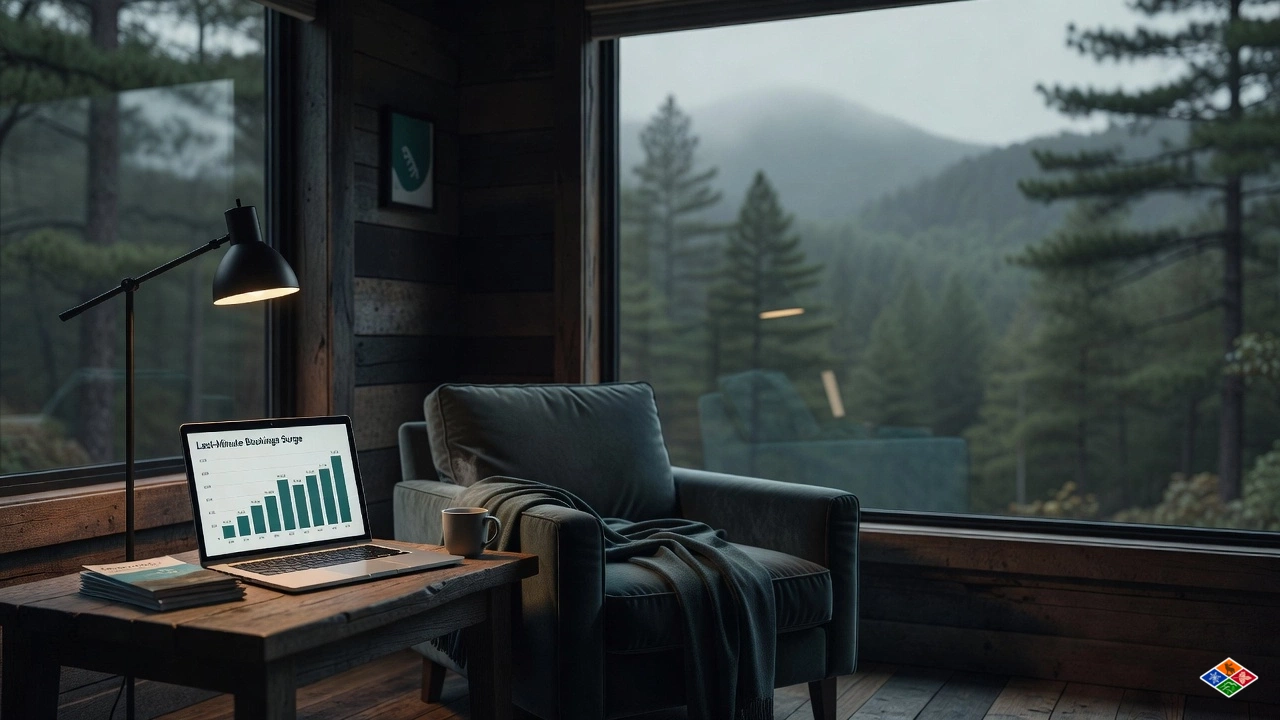
Here is something that might change how you approach planning your Smokies trip: roughly 27% of all cabin reservations in the Smoky Mountains are now made within one week of arrival. That is not a small slice of travelers taking a chance. That is a meaningful, growing segment of the market booking on pure impulse, and the market has quietly adjusted to accommodate them.
The data on booking windows backs this up. For summer July stays, the average booking window has compressed from 34 days in 2022 down to 29 days in 2026. Spring booking windows have shrunk even faster, dropping from 19 days to just 15 days over the same period. Travelers are simply waiting longer before committing, and cabins are still getting filled.
That said, last-minute availability is not created equal. Shoulder seasons and weekday check-ins offer the most realistic last-minute options, with January and February historically being the softest stretches for Smokies cabin demand. Some owners even drop nightly rates during these windows to attract short-notice guests, which means last-minute can occasionally mean better value, not just a consolation prize.
Where last-minute booking gets risky is with premium inventory. Large-group cabins with indoor heated pools, theater rooms, and sweeping mountain views are consistently the first properties to get claimed, and they hold their bookings. If your group has a specific must-have list, like a 5-plus bedroom cabin with a pool on a Saturday in October during fall foliage, waiting until the final week is a real gamble.
Flexibility is your greatest asset if you are booking late. Guests who can adjust their check-in day, shift their dates by a night or two, or consider a slightly smaller cabin will find far more options in that final window.
One practical tip worth taking seriously: booking directly with a management company gives you access to real-time availability that third-party platforms do not always reflect accurately. OTA listings can lag on updates, show incomplete inventory, or miss units that just opened up. A direct visit to Elk Springs Resort’s website or a quick phone call is genuinely the most reliable way to see what is actually available right now.
If you found your cabin on a major travel platform, here is something worth knowing before you click “reserve”: that platform is going to charge you a service fee on top of the rental rate. OTA platforms typically charge guests anywhere from 6% to 14% of the booking subtotal. On a $2,000 reservation, that adds $120 to $280 before a single tax is applied. On a longer group stay costing $4,000 or $5,000, the math gets genuinely painful fast.
The real-world gap is well documented. One Smoky Mountain operator published a direct side-by-side price comparison for the same cabin on the same dates: the identical weeklong April stay ran $6,542.88 through a major travel platform and $5,566.31 when booked directly, a savings of nearly $1,000 on a single trip. That is not a promotional estimate; it is a documented price difference on a real property.
Skipping the platform fee is the most obvious benefit, but it is not the only one. Property management companies that accept direct bookings frequently offer exclusive rates, seasonal promotions, and package deals that never appear on OTA listings. These perks exist specifically because the management company saves money when you come to them directly, and the better ones pass a portion of that savings back to you.
There is also a communication benefit that is easy to underestimate. When you book through a third-party platform, any question you ask travels through a support layer that has no actual connection to the cabin, the keys, or the team on the ground. When you book directly, you are talking to the people who manage the property. If you have an early arrival request, a question about the game room setup, or a maintenance issue mid-stay, a direct relationship produces a faster and more useful response every single time.
OTAs dominate the first page of search results for cabin rental keywords, which is why most travelers assume booking through them is the only option. It is not. Once you spot a property or management company that looks like a good fit, search the company name directly and look for their own website. Most quality management companies maintain a dedicated booking portal with real-time availability and rates. Booking there, rather than through the platform where you first discovered them, is usually all it takes to avoid the service fee entirely and access rates and perks that simply do not exist on the OTA side.
Planning a reunion or large group getaway in a single cabin sounds simple until you realize how many details can quietly derail the whole experience. The single most important thing to understand before you start browsing listings is this: the “sleeps X” number in a cabin’s headline is often misleading. A cabin advertised as sleeping 20 guests might achieve that count through pull-out sofas, shared loft sleeping areas, and bunk arrangements tucked into common spaces. Compare that to a cabin sleeping 18 guests across 9 private en-suite bedrooms, and you have two completely different trips. For multi-family groups where each household expects their own space and a door that closes, private bedroom count is the real metric that matters during your search.
Multi-generational groups need to think one layer deeper than bedroom count. Floor plan layout matters enormously when you have grandparents and toddlers sharing a roof with teenagers and college-aged cousins. Older adults and young children need sleeping areas buffered from the game room, living areas, and kitchen spaces where the younger crowd will still be active well past midnight. When you are evaluating a cabin, look at where the primary bedroom suites sit in relation to the main entertainment zones. A cabin with thoughtful zoning prevents the friction that turns a fun reunion into a tired, grumpy one by day two.
Shared amenities are not just nice extras on a group trip. They are the actual social infrastructure that makes staying together in one cabin worthwhile. An indoor heated pool gives the group a built-in gathering point regardless of weather. A long dining table that seats everyone creates the communal meal experience people travel for. An outdoor fire pit becomes the spot where conversations stretch past midnight. According to Sevierville’s large group retreat guide, purpose-built Smoky Mountain group cabins are specifically designed around these shared spaces, often featuring home theaters and game rooms alongside multiple living areas.
Before you book, run through a short logistics checklist that most people skip. First, confirm parking capacity and make sure the driveway can handle the number of vehicles your group is bringing, since mountain access roads can be narrow and unforgiving. Second, check the kitchen setup. Large-group cooking requires multiple refrigerators, generous counter space, and enough cookware to feed everyone at once. Third, count the bathrooms and compare them to your group size. A beautiful 10-bedroom cabin with only four bathrooms creates a morning bottleneck that will frustrate everyone by the second day of the trip.
For groups that want all of this handled in one place, Elk Springs Resort’s large group cabins extend up to 9 private bedrooms, with amenity loads that are genuinely scaled to match the guest count. Indoor pools, game rooms, theater rooms, and multiple living areas come together in properties that are built specifically for the multi-family experience rather than simply being oversized versions of a standard rental. Booking well in advance is strongly recommended for these larger properties, particularly around fall foliage season, summer weekends, and holidays, when 7-to-9-bedroom cabins fill up earliest.
Getting the most out of Great Smoky Mountains National Park takes a little advance planning, but the payoff is enormous. Here are five things every first-time visitor should know before they arrive.
1. Entry is free, but parking is not guaranteed. The park charges no entrance fee, which makes it one of the best deals in American travel. However, free entry does not mean showing up without a plan. Popular trailheads including Alum Cave, Laurel Falls, and Chimney Tops require advance parking reservations on peak days. Before your trip, visit recreation.gov to check reservation requirements and book your spot. Spots fill up faster than most people expect, especially during summer and fall foliage season.
2. The park spans two states, and your cabin location matters. The park covers more than 500,000 acres across Tennessee and North Carolina. Gatlinburg serves as the primary gateway to the Tennessee side, putting you close to the most-visited trails and visitor centers. Cherokee, NC provides access to the southern entrances and the Clingmans Dome corridor, which is the park’s highest drivable point. Knowing which side of the park you want to prioritize helps you choose the right home base before you book. For a deeper look at what the park offers, the Great Smoky Mountains Travel Guide is a thorough planning resource.
3. Go early to beat the crowds. Midday crowds on popular trails are genuinely intense during summer and fall. Sunrise hikes solve this problem almost entirely. Getting to the trailhead at or just after sunrise means cooler temperatures, thinner crowds, and the chance to catch morning fog drifting through the valleys. One practical advantage of staying in a cabin with a mountain view is the ability to step outside first thing and assess visibility before committing to the drive. If the skies look hazy, you can adjust your plans without wasting the morning.
4. Scenic drives work for every visitor. Not every great Smoky Mountains experience requires a strenuous hike. The Cades Cove Loop and Roaring Fork Motor Nature Trail both deliver memorable wildlife sightings, pioneer history, and stunning foliage without leaving your vehicle. These routes are especially well-suited for families with young children or guests with limited mobility. Note that Roaring Fork closes seasonally during winter, so check current conditions if you are visiting outside of spring through fall.
5. Gatlinburg puts you minutes from the park’s main hub. A Gatlinburg-area cabin positions you within 10 to 15 minutes of the Sugarlands Visitor Center, which serves as the central staging point for Tennessee-side trail access and ranger-led programs. Starting your mornings there gives you current trail conditions, park maps, and staff guidance before you head out for the day.
Before you commit to any smoky mountain cabin rentals, a few smart questions can protect your trip from unpleasant surprises. Here are the most important ones to ask before you hand over your deposit.
Not every cabin listing you see online is created equal, and the difference often comes down to who is actually running the property.
Individual owner listings can range from genuinely wonderful to frustratingly inconsistent. When a single homeowner manages their own cabin, the quality of your experience depends almost entirely on how much time and attention they’re willing to invest. A highly dedicated owner might respond to messages within minutes, keep the hot tub spotless, and restock supplies after every stay. A less attentive one might leave maintenance issues unresolved, respond slowly during your trip, or let amenities fall behind. There’s no way to know which version you’re getting until you’re already there.
Professionally managed properties operate differently from the ground up. Instead of relying on one person’s availability and motivation, a management company brings a dedicated team to every aspect of your stay. Cleaning follows standardized protocols between every checkout. Maintenance issues get routed to professional vendors, not a homeowner trying to troubleshoot remotely at 11 p.m. If something goes wrong during your trip, there’s a real support team to call, not a voicemail box. That reliability isn’t accidental; it’s built into how the operation runs.
The Smoky Mountain rental market is also shifting in a direction that benefits guests. The market is entering what industry analysts are calling a “professional investor phase”, where data-driven operations and serious amenity investment are pulling high-performing properties further ahead of the pack. Guests who book with professional operators benefit directly from that momentum, getting properties that are actively maintained, updated, and priced competitively.
There’s also a practical flexibility advantage. A management company with a multi-property portfolio can offer you options across different bedroom counts, amenity packages, and price points, all under one roof. If your first choice is already booked, there’s another option within the same trusted brand rather than starting your search over from scratch.
Elk Springs Resort operates as a professional vacation rental management company across its Gatlinburg-area portfolio. Every interaction, from your first inquiry through checkout, is handled by a dedicated team. That’s the experience a professional operation is designed to deliver.
One of the biggest surprises for first-time Smokies visitors is just how close Gatlinburg actually is. In fact, Gatlinburg sits within a day’s drive of roughly two-thirds of the entire U.S. population, which helps explain why Great Smoky Mountains National Park draws over 12 million visitors every single year. If you live anywhere in the Southeast or lower Midwest, there is a very real chance you are closer to a luxury mountain cabin than you think.
Atlanta, GA is one of the best examples of this. The drive runs approximately 2.5 hours via I-75 North and US-441, making the Smokies one of the most convenient mountain getaways available to one of the largest metro populations in the entire country. For Atlanta residents, a Friday afternoon departure can have you on a mountain deck with a view before dinner.
Charlotte, NC lands roughly 3.5 to 4 hours away heading west on I-40. That window is ideal for a long weekend, especially if you leave Friday evening after traffic settles and plan a Sunday or Monday return to skip the Sunday interstate rush.
Nashville, TN sits about 4 hours east on I-40. The drive through Cookeville and Crossville gives you rolling hill-country scenery the whole way, so the landscape starts warming you up to the mountains well before you arrive.
Cincinnati, OH and Louisville, KY are both comfortably within the 5 to 5.5 hour range via I-75 South and I-64 South respectively. For Midwest families and groups looking for a long-weekend escape that does not require a flight, the Smokies punch well above their weight in terms of accessibility and payoff.
You’ve done the research, run the numbers, and worked through the key decisions. Here’s the simple framework to carry into your booking: start with bedroom count and run the cost-per-person math before anything else, then filter by the amenities your group will actually use rather than the longest feature list you can find. Once you’ve found the right cabin, verify every detail directly with the management team before you commit. Policies, fees, pet rules, and special requests are all worth a five-minute conversation.
Booking direct with Elk Springs Resort skips the OTA service fees that quietly inflate what you thought was a great rate. You also get real-time availability, access to exclusive specials, and a direct line to a team that can handle group coordination, special requests, and any questions that come up during your stay.
On timing: the larger cabins, especially five to nine bedrooms with indoor heated pools and theater rooms, are among the first to fill for peak dates. If your trip is date-specific, acting early is the safest move. If you’re flexible, last-minute availability does exist.
Browse Elk Springs Resort’s full inventory by bedroom count, or reach out directly for group booking help. With 12 million annual visitors, the Smokies deliver year-round, and a luxury cabin stay here is genuinely one of the best-value experiences within a day’s drive for most of the Southeast.
Booking a Smoky Mountain cabin rental does not have to be stressful or complicated. By keeping these key takeaways in mind, you will set yourself up for an unforgettable experience. Do your research on location and amenities, read the fine print to avoid surprise fees, book early especially during peak seasons, and communicate clearly with your host before arrival.
The Smoky Mountains are waiting for you, and the right cabin can turn a simple trip into a memory that lasts a lifetime. You deserve a getaway that feels effortless from the moment you book to the moment you check out.
Now it is time to stop dreaming and start planning. Browse available cabins today, use the tips from this guide, and get ready to enjoy that perfect mountain morning, coffee in hand, mist on the mountains, and not a worry in sight.
 The Ultimate Guide to Wedding and Event Cabins in the Smoky Mountains (2026)
 Ribfest and Wings is Coming Soon to Gatlinburg, TN
 Pet Friendly Cabins with Private Indoor Pools
 How to Plan a Perfect Trip to Gatlinburg Tennessee: Complete Travel Guide
 Should I Rent a Pool Cabin or a Cabin Without an Indoor Pool in Gatlinburg? Complete Decision Guide
 Top Vacation Rental Manager in Gatlinburg
