
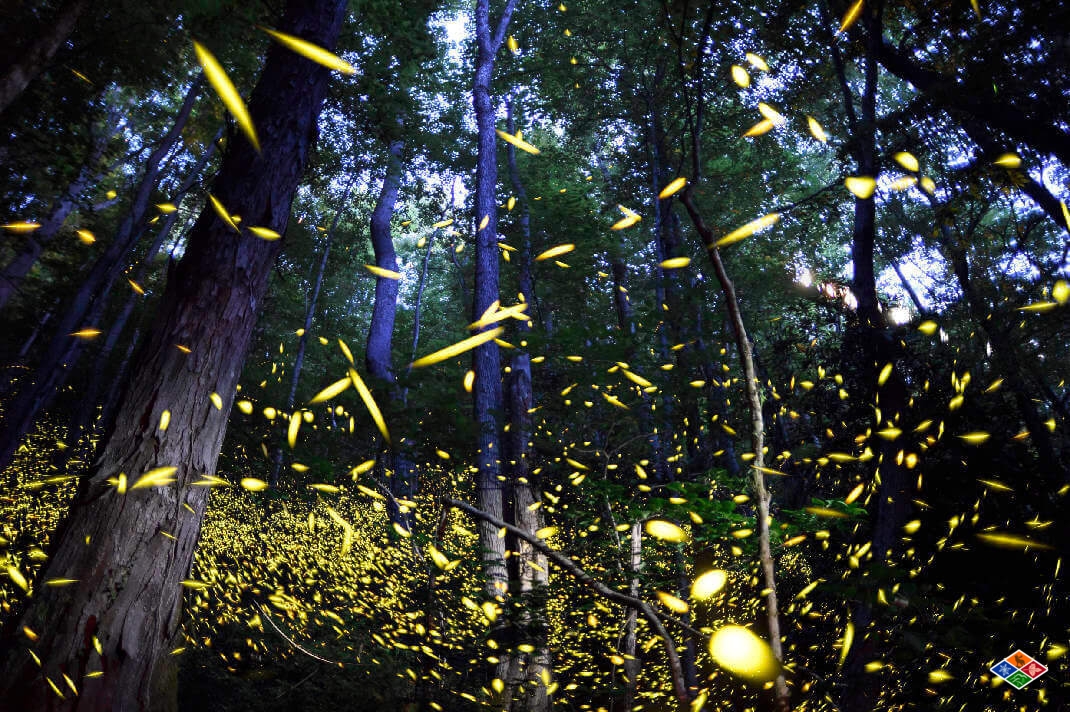
You’ve seen the mesmerizing glow of fireflies flickering on a warm summer night, maybe you’ve even caught a few in your hands, but have you ever seen them synchronize? Gatlinburg, TN, is one of the few places on earth where you can watch Smoky Mountain fireflies sync up each June.
Nestled in the western part of the Great Smoky Mountains, synchronous fireflies emerge every late spring to find their mate. Lucky for you, this results in a light show that draws visitors from all over the world to firefly Gatlinburg viewings each season.
If you’re interested in attending, here’s how you can see Gatlinburg fireflies in 2026.
You can see fireflies flashing around the Smoky Mountains all summer long, making Gatlinburg the perfect summer vacation, but the awe-inspiring synchronizing event only happens a couple of weeks out of the year.
According to the National Park Service, the peak synchronous firefly viewing window in the Smoky Mountains typically falls in late May to early June, at dusk. The exact dates shift year to year based on soil temperature and moisture, so check the NPS website each spring for the confirmed 2026 lottery dates and viewing window.
While 19 firefly species live in the Great Smoky Mountains, synchronous fireflies (Photinus carolinus) are the only species known to synchronize their flashing patterns during mating season. During peak season, the synchronization appears as a flashing pulse every few seconds, followed by a dark pause before the forest lights up again.
The phenomenon typically runs for about two weeks between late May and early June, depending on weather and soil moisture levels. Synchronous fireflies spend most of their lives underground as larvae, sometimes for one to two years, before emerging as adults to search for a mate.
The Great Smoky Mountains span a whopping 522,427 acres between North Carolina and Tennessee. Despite its size, the synchronous fireflies mostly reside in the western part of the park.
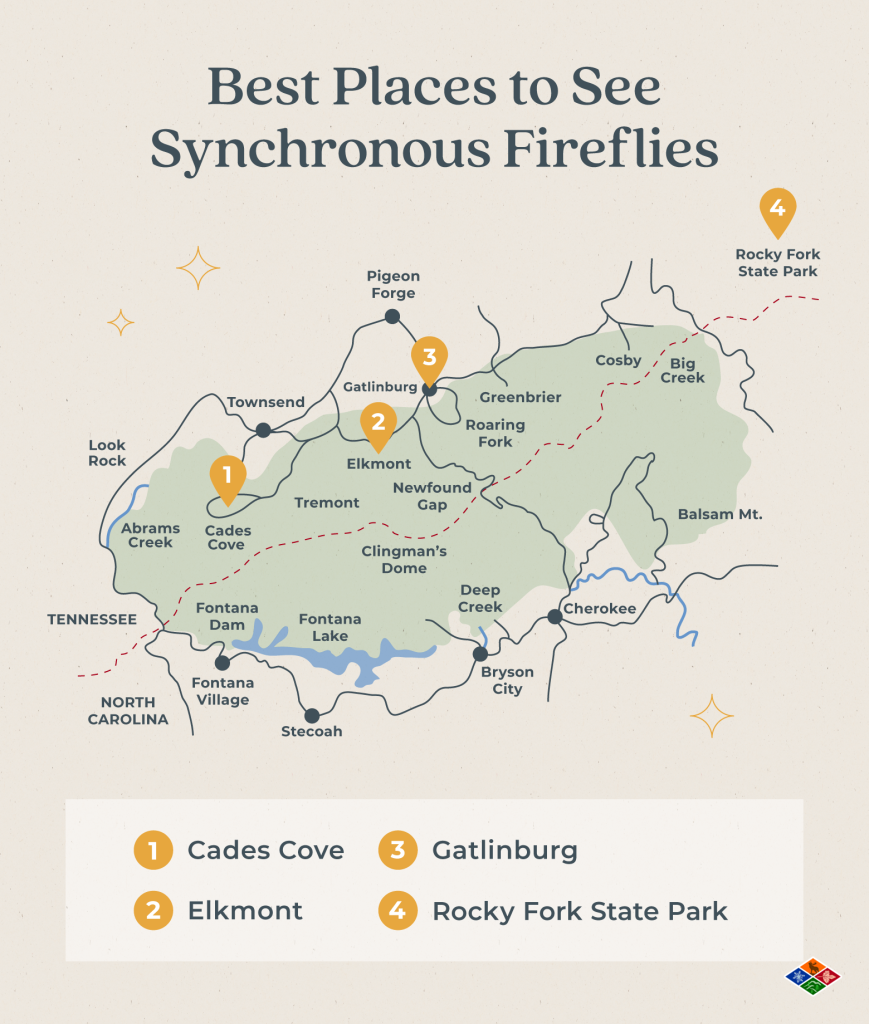
Here’s where to see fireflies in Tennessee in 2026:
Enough talk about how spectacular this event is. How exactly do you see the Smoky Mountain fireflies? From an evening hike to the lucky lottery draw, here’s how to plan your 2026 viewing trip.
The synchronous firefly lottery began in 2006 to curb traffic congestion and give visitors a fair shot at the Elkmont viewing area. Registration typically opens in late April for a few days only. Check the NPS website in early spring 2026 for the exact open and close dates, then register as soon as the window opens.
Winners are notified by email within about a week of registration closing. Each winning pass covers parking for one vehicle, carrying up to six people into the Elkmont viewing zone for one evening.
Located an hour from Elkmont, Cades Cove offers another opportunity to view synchronous fireflies. Hike nearby trailheads or bike the 11-mile Cades Cove Loop Road, and you might just get to see some fireflies sync up.
Since it’s not a designated viewing area, keep up to date with trail closures and vehicle-free Wednesdays so you can plan accordingly.
The show at Cades Cove won’t be as dense as the main Elkmont event, but the setting along the loop is quieter and you can linger as long as you like without lottery timing pressure.
Nestled near Cades Cove, Anthony Creek Trail is a hidden gem for viewing synchronous fireflies. Fireflies favor warm, damp areas, making this trail a reliable spot to find synchronized stragglers during peak weeks.

Winding around a delicate creek, synchronous fireflies frequent this moderate to easy Smoky Mountain hiking trail, though in smaller numbers than at the main event locations.
Head to the Cades Cove Scenic Loop before dusk and take the Anthony Creek Trail into the woods as the light fades.
If you don’t win the lottery, you can still see this event if you know where to stay in the Smoky Mountains. Book the Firefly Lodge in Gatlinburg, TN, named after these dazzling creatures. Located just a few miles from numerous trailheads in the Smoky Mountains, you can walk around town and then stroll through popular firefly areas as evening settles in.
You might even get lucky and see some synchronous fireflies from the comfort of your cabin. Imagine relaxing in your private hot tub, looking out over your balcony just as a synchronized flash ripples through the tree line.
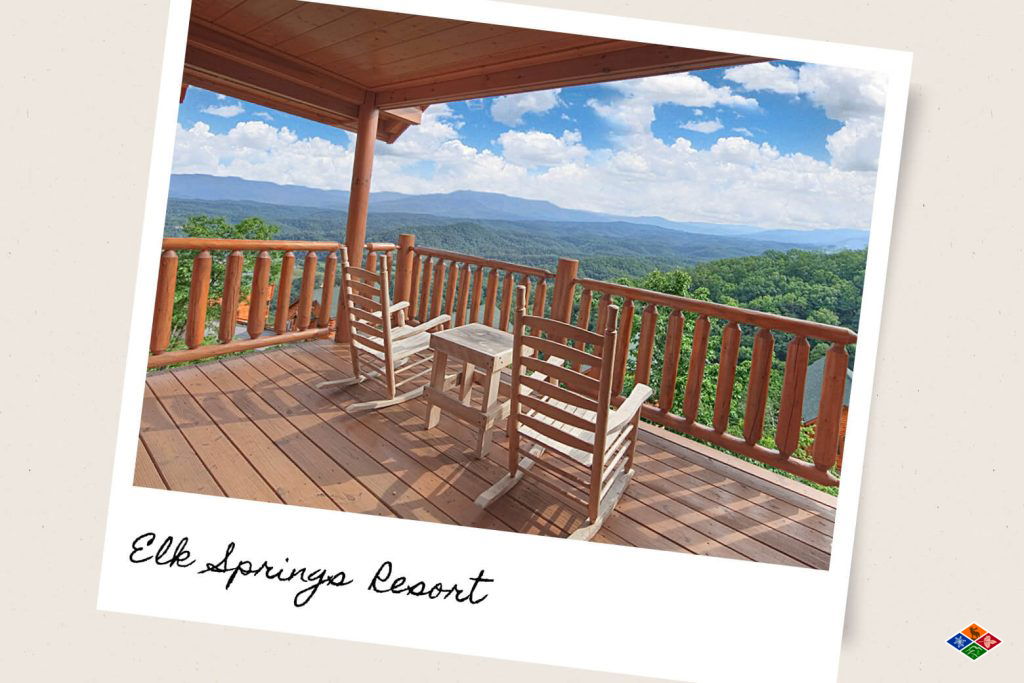
With plenty of space, you can invite friends and family to make this a viewing trip to remember. Or make it a romantic Gatlinburg trip for two.
Have your heart set on Elkmont fireflies but didn’t win the lottery? Here’s a little-known option: there are a few days before and after the peak late May to early June window when synchronous fireflies are still active.
Numbers will be lower outside the peak window, but you’ll avoid lottery stress entirely. No parking permit is required during those shoulder days, which means traffic can build up fast. Head out early, arrive before dusk, and wait for the underbrush to light up.
Photinus carolinus, which has a home in the Smoky Mountains, is one of only a few species in North America known to synchronize their flashing patterns during firefly mating season. Fireflies are bioluminescent: a chemical reaction in organs beneath their abdomens combines oxygen with the compound luciferin to produce a flash of yellow, green, or blue light.
While typical fireflies display their own individual light sequences, male synchronous fireflies coordinate their flashing to help females identify the correct species for mating. Think of it as a species-specific signal that cuts through the noise of a summer forest at night.
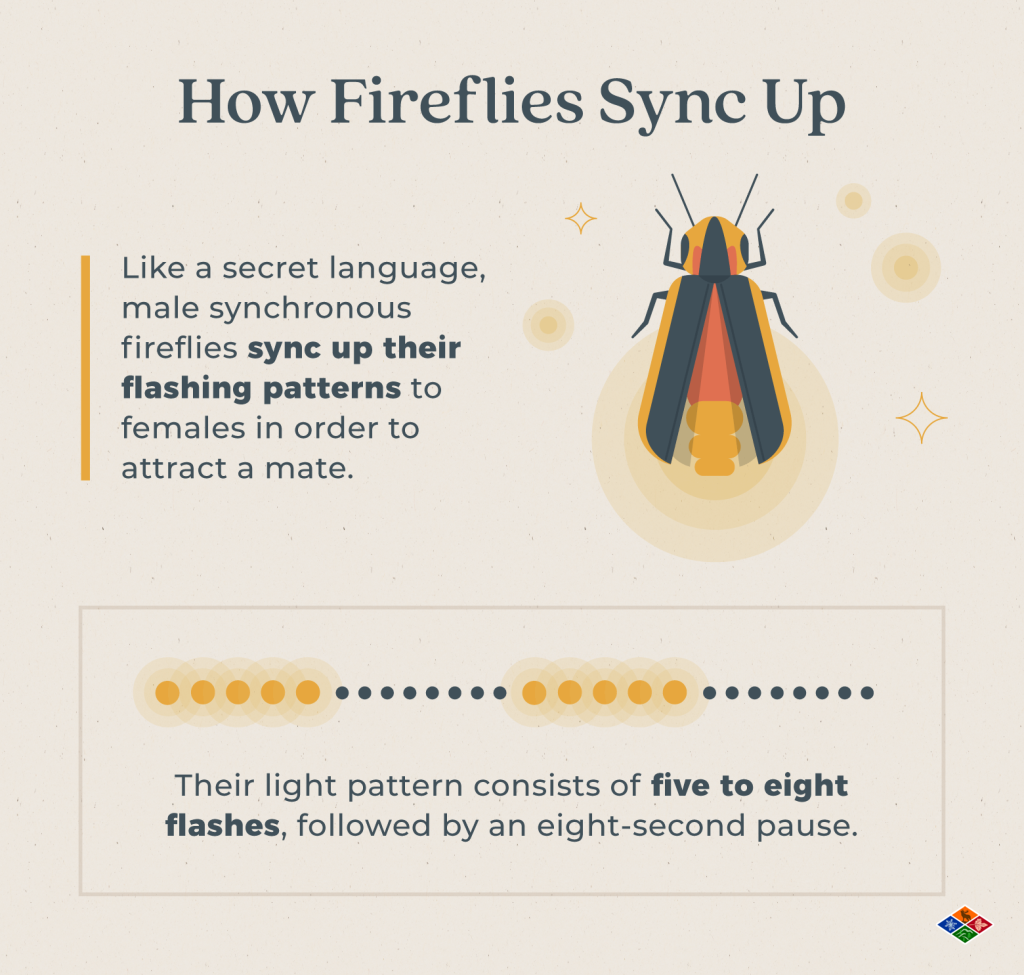
The Photinus carolinus pattern consists of five to eight rapid flashes, followed by an eight-second dark pause, then repeated. During peak season, the entire forest visibly pulses with this rhythm, a genuinely unusual experience that’s hard to describe until you’ve stood in the middle of it.
This light show serves a specific biological purpose. The survival of the synchronous firefly species depends on successful mating, so follow these guidelines to keep the event safe for you and the insects:
Worried about entertaining the family while keeping the fireflies safe? While kids might be extra tempted to try to catch a few, it’s important they don’t. After all, you don’t want to be the reason they don’t find a mate!
Instead, here are a few ways to entertain the kids without disturbing the beetles. (Yes, fireflies are actually beetles!)
The Smoky Mountains synchronous firefly event is one of the most unusual natural spectacles in the eastern United States. It’s worth planning a trip around, whether you score a lottery pass or take the quieter trail-and-shoulder-day route.
While you’re in the area, take in all the Great Smoky Mountains has to offer, from waterfalls to scenic drives to backcountry hikes.
Downtown Gatlinburg is just one mile from the national park, with lively dinner and shows every night of the week. Enjoy your stay at a cozy cabin in Gatlinburg with the entire family, then head into the Great Smoky Mountains to make memories that last a lifetime.
Sorry, Cabins can’t be previewed in the block editor. You can instead save this post as a draft to preview before publishing.
.cabin-results-meta, .cabin-results-pagination { display: none; } .preview-warning { display: none; padding: 20px; background-color: #f7f7f7; color: #9d9d9d; text-align: center; } .acf-block-preview .preview-warning { display: block; } [data-results] { padding: 20px 0; } .cabin-teaser-grid { justify-content: start; overflow-x: scroll; padding: 0 20px 20px; margin-left: -20px; margin-right: -20px; grid-template-columns: repeat(4, 340px); } .dynamic-loader { margin: 0; } .cabin-teaser { box-shadow: 0 5px 20px 0 rgba(119, 119, 119, .2); } .cabins-cta { font-size: 16px; line-height: 24px; font-weight: 500; color: #fff !important; background-color: #435a43; border-radius: 24px; text-transform: none; border: none; padding: 12px 32px; letter-spacing: 0; transition: all 150ms ease; } .cabins-cta:hover { opacity: 0.7; } document.addEventListener(‘DOMContentLoaded’, () => { const wrapper = document.getElementById(‘cabins-block_353cc8c685be4f98e504ea5d0a49675b’); const initialize = setInterval(() => { if (typeof Cabins === “undefined”) return; if (typeof Cabins.search !== “function”) return; clearInterval(initialize); /* begin duplicate logic from svelte */ const initialParams = new URLSearchParams(); const serverParamString = ‘locations%5B0%5D=14’; serverParamString .split(‘&’) .map((part) => decodeURIComponent(part)) .forEach((part) => { if (part.includes(‘[‘)) { const name = part.substring(0, part.indexOf(‘[‘)); const value = part.substring(part.indexOf(‘=’) + 1, part.length); initialParams.append(name, value); } else { const [name, value] = part.split(‘=’); initialParams.append(name, value); } }); let bedrooms = initialParams.get(‘bedrooms’) ?? null; let occupancy = initialParams.get(‘occupancy’) ? parseInt(initialParams.get(‘occupancy’)) : 0; let types = initialParams.getAll(‘types’) ?? []; let locations = initialParams.getAll(‘locations’) ?? []; let amenities = initialParams.getAll(‘amenities’) ?? []; const filterUrlString = Object.entries({ …(bedrooms ? { elk_bedrooms: bedrooms } : {}), …(occupancy ? { elk_occupancy: occupancy } : {}), …(types?.length ? { elk_types: types.join(‘+’) } : {}), …(locations?.length ? { elk_locations: locations.join(‘+’) } : {}), …(amenities?.length ? { elk_amenities: amenities.join(‘+’) } : {}), }) .map(([k, v]) => `${k}=${v}`) .join(‘&’); /* end duplicated from svelte */ /* And use this modified format of filter string in the “see more” button */ const button = wrapper.querySelector(‘.cabins-block-footer a’); if (button && filterUrlString && !button.hasAttribute(‘data-no-filters’)) button.href += `?${filterUrlString}`; /* Perform search */ Cabins.search( `force_pg_size=4${filterUrlString ? “&”+filterUrlString : “”}`, { history: false, paginate: false, noAbort: true, wrapper } ).then((data) => { if (!data) throw new Error(“Could not retrieve weekend cabins”); if (data.raw?.cabins?.length === 0) throw new Error(“No cabins available this weekend”); // success, rendering is handled within Cabins.search function wrapper.querySelector(‘.cabins-block-footer’).style.display = “flex”; }).catch((error) => { // cabin search error or cabin search empty console.warn(error.message); wrapper.remove(); }); }, 100); })
Yes, seeing synchronous fireflies is a rare phenomenon that happens only a couple of weeks out of the year in very specific areas of the country. The largest event occurs in Elkmont, TN, but smaller events take place throughout Tennessee, North Carolina, and South Carolina. If you’re able to catch the show, consider yourself lucky!
Yes! Lightning bugs and fireflies are the same insect. They’re technically nocturnal beetles, believe it or not, with 2,400 known species worldwide. Whether you call them lightning bugs or fireflies, they’re both one and the same.
Synchronous fireflies live 1-2 years as larvae in the ground and just three to four weeks once they mature and find a mate. The actual synchronous firefly event only lasts a couple of weeks, from late May to early June each year.
Synchronous fireflies are bioluminescent. They have organs under their abdomens that combine oxygen with the chemical luciferin to produce a yellow, green, or blue glow.
Yes, Phausis reticulata (Blue Ghost Fireflies) are a different species from Photinus carolinus, the synchronous fireflies seen in the Smoky Mountains.
 16 Things To Do in Wears Valley: Sightseeing, Shopping, Eating, and Adventuring
 Pigeon Forge Tennessee Wedding Chapels (and Where to Stay After)
 How To Find a Rustic Cabin Rental In Gatlinburg
 Best Cabins With Private Pools in Gatlinburg
 Luxury Gatlinburg Cabins Indoor Pool: Your Complete Guide to Year-Round Swimming in the Smokies
 Things to Do in Gatlinburg at Night
