
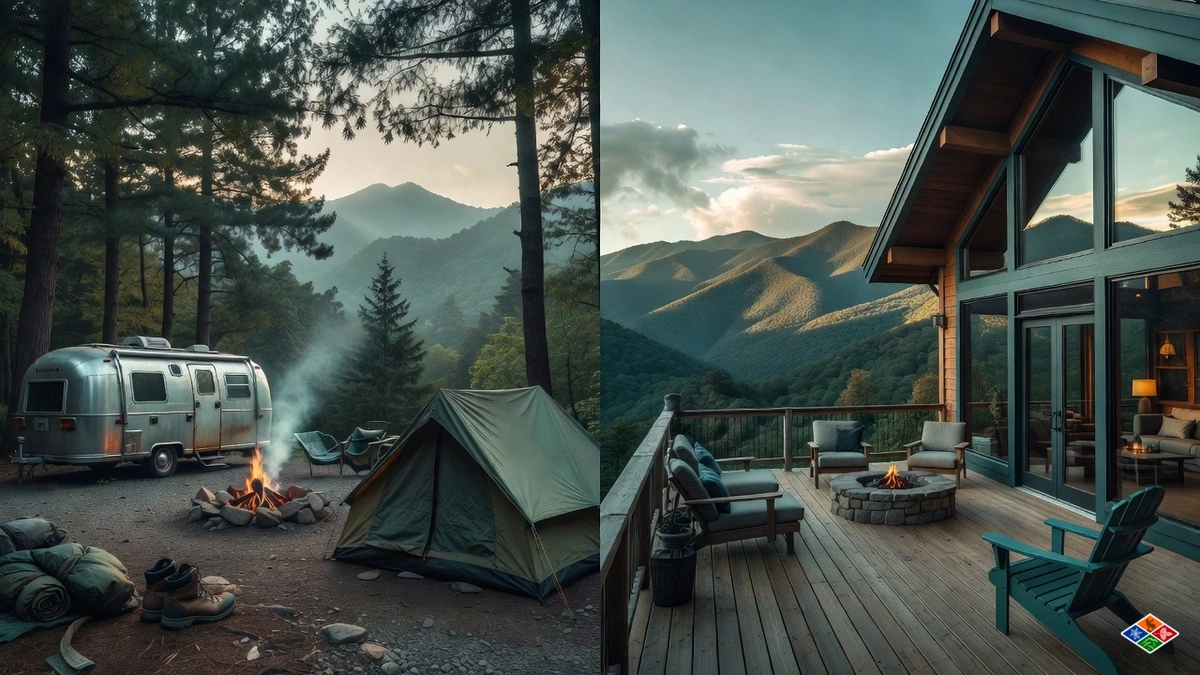
So you’re planning a trip to Pigeon Forge and you’ve hit that classic travel dilemma: do you rough it under the stars or treat yourself to a cozy cabin with a hot tub? Trust me, you’re not alone in this debate. It comes up all the time, and honestly, the answer isn’t as straightforward as you might think.
Whether you’re a first-time visitor or finally making that Smoky Mountains dream trip happen, choosing the right place to stay can make or break your experience. Pigeon Forge campgrounds offer a budget-friendly, nature-immersive option that plenty of travelers absolutely love. But luxury cabins bring their own kind of magic to the table too.
In this post, we’re going to break down both options in a simple, no-fluff way. We’ll look at cost, comfort, location, and overall experience so you can walk away knowing exactly which choice fits your travel style. By the end, you’ll have a clear picture of what to expect from both options and feel confident booking the perfect stay for your Pigeon Forge adventure.
If you’re searching for pigeon forge campgrounds, here’s what you’ll actually find on the ground: a range of options that vary widely in price, amenities, and overall feel. Getting clear on those differences before you book can save you a lot of frustration, especially during peak season.
The most recognizable names in the area are the Pigeon Forge/Gatlinburg KOA Holiday, Jellystone Park Pigeon Forge, and Elkmont Campground inside Great Smoky Mountains National Park. KOA offers the familiar chain-campground experience with RV sites, tent sites, shared bathhouses, a camp store, and basic WiFi in common areas. Jellystone steps things up a notch with themed family activities, water attractions, and daily programming, making it feel more like a destination resort than a simple overnight stop. Neither option, though, gives you private amenities at your individual site. Hot tubs, game rooms, and private pools just aren’t part of the campground package here, no matter which property you choose.
Tent sites at private campgrounds in the corridor typically run somewhere between $25 and $60 per night, while full-hookup RV sites generally land in the $70 to $120 range. If you’re eyeing Elkmont Campground inside the national park, sites run roughly $17 to $30 per night, which sounds like a great deal until you realize that Elkmont has no electric, water, or sewer hookups at individual sites. You’re also competing with millions of other visitors for those spots. The park drew 13.2 million visitors in 2023 alone, and Elkmont is consistently one of its most popular and heavily used campgrounds.
Timing is everything here. Peak summer weeks like the July 4th holiday and mid-July typically require reservations 10 to 14 weeks in advance across the entire Smokies region. All 10 national park campgrounds require reservations through Recreation.gov, and walk-up availability essentially disappears during busy stretches. Seven of the park’s campgrounds are also seasonal, opening in May, which creates an even tighter planning window for spring and summer trips.
Campgrounds along the Pigeon Forge corridor sit in a commercially developed, lower-elevation stretch of Highway 441, which puts you close to Dollywood and the strip’s many attractions. That’s genuinely convenient if theme parks and outlet shopping are your priorities. However, the setting is very different from the secluded, mountain-immersed experience many travelers picture when they imagine a Smokies getaway. If quiet mornings, mountain views, and a sense of escape are what you’re after, the campground options in this corridor may leave you a little underwhelmed.
Most people assume camping is automatically cheaper than renting a cabin. When you run the actual numbers for a group of 10, that assumption falls apart pretty quickly.
Start with the basics. A premium RV site in Pigeon Forge runs around $100 per night, and that is before anyone spends a single dollar on food, fuel, or fun. Across a 4-night trip, you are already looking at $400 in site fees alone. But here is where the real costs start stacking up. Gear adds up fast, whether you are renting sleeping bags and camp stoves or buying them outright. Propane, ice, and cooler supplies are daily expenses that most people forget to factor in. And then there is the big one: food. Realistically, cooking full meals for 10 people at a campsite is impractical enough that most groups end up eating out for the majority of their trip. Even a modest $30 to $40 per person per day in restaurant spending adds $1,200 to $1,600 to your campground trip total over four days. Suddenly, that “affordable” campsite does not look quite so affordable.
Now look at the cabin side of the equation. A 5-bedroom Elk Springs Resort cabin priced around $500 to $600 per night, divided across 10 guests, comes out to just $50 to $60 per person per night. That per-person rate includes a full kitchen, a private hot tub, and a full suite of amenities that would cost significantly more to replicate at any campground. You can review current options at Elk Springs’ Pigeon Forge cabin listings to see how pricing and amenities break down across different cabin sizes.
One more variable that completely changes the comparison: where you book. Running a cabin reservation through a major OTA platform adds significant fees that most travelers do not see coming. Booking directly through elkspringsresort.com instead of an OTA saves travelers $200 to $450 on a typical 7-night stay. For larger group cabins priced at $4,000 or more per week, OTA service fees alone can exceed $600. That means a fair comparison between campground costs and cabin costs has to use direct-book cabin pricing, not the inflated rates you would see on a third-party platform.
A fully equipped cabin kitchen is not just a nice amenity; it is a genuine cost-eliminator. While campers are eating out multiple times per day because feeding 10 people over an open fire is more effort than it is worth, cabin guests are grocery shopping once and cooking comfortably all week. That gap between eating in and eating out is often what closes the entire price difference between camping and cabin-staying for larger groups. When you compare total trip spend rather than just nightly lodging rates, luxury cabin rentals frequently come out equal to or cheaper than a premium Pigeon Forge campground stay for groups of six or more, especially once you remove OTA fees from the equation entirely.
Let’s get specific about what you’re actually trading when you choose a campsite over a cabin, because the amenity gap is much wider than most first-time visitors expect.
Hot tubs consistently rank among the most-searched amenities in the Smoky Mountains market, and that’s no surprise given the area’s cool mountain evenings and the appeal of soaking under the stars after a long day on the trails. Elk Springs Resort cabins include private hot tubs as a standard feature, not an upgrade. Across every reviewed campground in the Pigeon Forge area, including budget options, nature-focused sites, and even the higher-end branded resort options like Camp Margaritaville RV Resort, private hot tubs simply don’t exist at individual sites or rental units. Select Elk Springs cabins take it even further with indoor heated pools and private theater rooms, the kind of amenities that almost no campground and very few competing rental options in the region can offer at all.
Here’s something worth thinking about before you book: the Smokies get rain. When a soggy afternoon rolls in, your campground options are your tent, your RV, or the camp store. Many Elk Springs properties include dedicated game rooms stocked with arcade games, billiards, and foosball, giving families and mixed-age groups a genuine indoor fallback. This matters a lot when you’re traveling with teenagers, grandparents, or anyone who isn’t thrilled about sitting in a folding chair watching it drizzle.
Some campgrounds, like Greenbrier Campground near Gatlinburg, list WiFi as an included perk. But campground WiFi typically means shared bandwidth across an entire property, not a dedicated private connection. Elk Springs cabins include high-speed private internet throughout, which makes a practical difference whether you’re a remote worker keeping up with emails, a family streaming movies after dinner, or someone trying to pull up trail maps and purchase Dollywood tickets without fighting for signal.
Many people searching for Pigeon Forge campgrounds are ultimately chasing the scenic Smoky Mountain experience. The honest reality is that most campground sites in the commercial Pigeon Forge corridor are surrounded by tree cover and neighboring sites, which limits open sightlines considerably. Even well-regarded options like Uncle Jim’s River Cove Campground offer beautiful river settings but not the kind of elevated, panoramic mountain views that define the classic Smokies moment. Elk Springs cabins are positioned with private decks designed to deliver exactly that view, which is often the image people picture when they first start planning a Smokies trip.
Here’s something most campground reviews won’t tell you upfront: the Smokies has some genuinely challenging weather, and it hits campers harder than almost any other type of visitor.
Summer in the Pigeon Forge valley is hot, humid, and relentless. Heat index values regularly climb above 95 degrees Fahrenheit during July and August, and that’s in the shade. For families with young children, older adults, or anyone with heat sensitivity, spending multiple nights in a tent or even a basic RV during peak summer can shift from “uncomfortable” to genuinely risky territory. Campgrounds in the area actively promote river access as a heat relief strategy, which tells you everything you need to know about how sustained the heat really is.
On top of the heat, afternoon and evening thunderstorms are practically a daily feature in July and August. This is a well-documented pattern in the Smokies region, with operators explicitly warning campers to expect storms and pack rain gear. Lightning activity at open campsites is a real safety concern, and when storms roll in, your option is typically a small, airless tent or a cramped RV. That’s not the vacation experience most people are picturing.
Fall foliage season is absolutely beautiful here, and it’s one of the most popular times to visit. But late October overnight temperatures in the mountains regularly drop into the low 40s or upper 30s. Most leisure travelers simply don’t pack serious cold-weather camping gear for what they’re thinking of as a leaf-peeping trip, and waking up shivering at 3am tends to leave a lasting impression on the whole group.
Spring runs into the opposite problem. March through May brings unpredictable rain and snowmelt that soaks tent pads, turns gear muddy, and makes keeping kids clean and comfortable a constant battle. A single afternoon downpour can flood a site and redefine your whole itinerary.
A climate-controlled luxury cabin with an indoor heated pool, covered deck, and fireplace removes weather as a variable entirely. It doesn’t matter what the forecast says; your group stays comfortable, your plans hold, and nobody’s trip gets derailed by an afternoon storm or a cold snap. In a region famous for rapid weather changes, that kind of consistency is a genuine practical advantage worth factoring into your decision.
Here’s something that surprises a lot of first-time Smokies visitors: choosing a Gatlinburg cabin doesn’t mean giving up Pigeon Forge. It means getting both.
Our cabins at Elk Springs Resort sit in Gatlinburg, but Pigeon Forge is roughly 12 to 15 minutes away by car, and Dollywood’s main entrance is about 15 minutes from your front door. That’s a shorter commute than most people drive to a grocery store. You’re not sacrificing access to the strip, the shows, or the theme parks. You’re just not sleeping in the middle of them, which is honestly a feature, not a drawback.
Here’s where the picture gets even clearer. While a Gatlinburg cabin puts you just minutes from Pigeon Forge, it also places you roughly 5 minutes from the Sugarlands Visitor Center entrance to Great Smoky Mountains National Park. No Pigeon Forge campground can compete with that. The park’s primary Gatlinburg-side entrances are simply farther from Pigeon Forge, meaning campground guests who want to hike, drive Clingmans Dome Road, or catch a sunrise over the mountains are adding meaningful drive time to every single park visit.
That matters more than people realize, especially when you factor in that 62% of all GSMNP visitors pass through Gatlinburg. Gatlinburg isn’t the quiet alternative to Pigeon Forge; it’s the central hub of the entire Smokies corridor.
The assumption many travelers make when searching for pigeon forge campgrounds is that staying in Pigeon Forge is required to experience Pigeon Forge. The drive between the two towns makes that assumption completely unnecessary. A secluded mountain cabin with real amenities gives you the same day-trip access, just with a dramatically better place to come home to at the end of the day.
And because you’re based in Gatlinburg, you also get walkable access to a genuinely charming downtown with restaurants, distilleries, the Arts and Crafts Community, and nightlife options that Pigeon Forge simply doesn’t replicate. You’re not choosing between two destinations; you’re getting both from a single base, without adding a single extra mile to your Pigeon Forge days.
Some trip types are genuinely a better fit for a campground. But there are several group profiles where a cabin isn’t just more comfortable, it’s actually the smarter and more practical choice from start to finish.
If your group includes grandparents, parents, and kids all traveling together, a campground creates real logistical headaches. You’re coordinating multiple campsites, figuring out sleeping arrangements across different spaces, and managing group meals in an outdoor communal setting. One shared cabin with a full kitchen, multiple bedrooms, and a living room where everyone can gather solves all of that at once. Elk Springs Resort offers cabins ranging from 1 to 9 bedrooms, which means you can match your cabin to your actual group size rather than paying for space you don’t need or cramming people into something too small.
These trips are built around a shared group experience, and that experience depends entirely on having the right space. A campground’s communal fire pit and shared picnic area aren’t the same as a private game room, a home theater, or a hot tub your group has exclusively to yourselves for the entire trip. For group travel in Pigeon Forge, the private entertainment amenities inside a cabin are what actually make the trip memorable.
Uneven terrain, shared outdoor restrooms, and weather exposure are manageable for some campers. For families with toddlers or guests with physical limitations, those same factors add friction to every single part of the day. Climate control, private bathrooms, and a real kitchen change the experience entirely.
Even couples or groups of four to six people should run the per-person math before defaulting to camping. A 2 or 3-bedroom cabin split across your group often lands at a comparable or lower per-person rate than a premium glamping site or deluxe RV hookup, and you’re getting far more value from cabin amenities than any campground tier can offer.
Here is the honest breakdown: Pigeon Forge area campgrounds are a genuinely good fit for solo travelers, minimalist backpackers, and budget-conscious couples who love sleeping under the stars and have no need for private amenity spaces. For that group, the lower nightly floor delivers real value.
For everyone else, the math tells a different story. Families, multi-generational groups, and friend groups of four or more face compounding costs at campgrounds once gear, fees, food logistics, and weather disruptions are factored in. Meanwhile, a luxury cabin splits private hot tubs, game rooms, full kitchens, and mountain views across every guest in your group, driving the per-person cost down to a level that campgrounds simply cannot match on total value.
One thing worth knowing right now: peak summer weeks at Elk Springs Resort book out 10 to 14 weeks in advance. If you are still in the campground-versus-cabin research phase, that window is closing faster than you might think. Booking directly at elkspringsresort.com saves up to $450 compared to booking through Airbnb or VRBO, because you skip the OTA service fees entirely.
Elk Springs Resort’s Gatlinburg location also places you 5 minutes from the national park entrance and 15 minutes from Dollywood. That positioning gives you everything Pigeon Forge offers without being tied to it, something no campground in the corridor can replicate.
At the end of the day, both campgrounds and luxury cabins have a real place in a Pigeon Forge getaway. Campgrounds win on budget and that unbeatable connection to nature. Cabins take the crown for comfort, privacy, and those unforgettable mountain views from your own private hot tub. Your travel style, group size, and budget will ultimately point you toward the right choice.
Here is the bottom line: there is no wrong answer. Both options put you within easy reach of the Smokies, Dollywood, and everything Pigeon Forge has to offer.
Now it is time to stop debating and start booking. Use what you learned here to match your stay to your travel personality, lock in your dates early, and get ready for a mountain trip you will actually remember. The Smokies are waiting.
 9 Ways To Honeymoon in Gatlinburg, TN
 Cabin Rentals in Gatlinburg: Why Elk Springs Resort Stands Apart
 Cheap Cabins in Gatlinburg TN: How to Find Real Value
 Luxury Gatlinburg Cabins Indoor Pool: Your Complete Guide to Year-Round Swimming in the Smokies
 Plan a Trip to Gatlinburg Tennessee: How to Make it Perfect – Complete Travel Guide
