

Picture this: you and your favorite people tucked away in a cozy mountain retreat, surrounded by stunning Smoky Mountain views, with nothing on the agenda but relaxation. Sounds pretty amazing, right? That dream is totally within reach, and it starts with finding the perfect cabins in Pigeon Forge.
But if you’ve never booked a cabin before, the whole process can feel a little overwhelming. There are so many options, so many things to consider, and honestly, it’s easy to make a booking mistake that could put a damper on your trip. The good news? A little bit of research goes a long way.
Whether you’re planning a romantic getaway, a family vacation, or a fun trip with friends, this guide is here to help. We’ve put together a handy list of everything you need to know before you hit that “book now” button. From choosing the right size cabin to understanding what amenities to look for, we’ve got you covered every step of the way. Let’s dive in!
If you’re searching for cabins in Pigeon Forge, here’s something most first-time visitors don’t realize until they’re already booking: Pigeon Forge is just one piece of a much bigger puzzle. The Smoky Mountains region is actually made up of three neighboring towns, and understanding how they fit together can completely change your trip planning experience.
Pigeon Forge, Gatlinburg, and Sevierville all sit within 15 to 30 minutes of each other in Sevier County, Tennessee. That tight geographic cluster means a cabin booked in any one of these towns puts the other two well within day-trip range. Many first-timers search for “cabins in Pigeon Forge” without realizing that a cabin in Gatlinburg, just 15 minutes down the road, would give them equally easy access to everything Pigeon Forge has to offer. Opening up your search to all three towns can significantly expand your options and help you land a cabin that fits your trip perfectly.
Pigeon Forge is the region’s entertainment capital. It’s home to Dollywood, which attracts over 2 million guests every year, plus dinner shows, go-kart tracks, outlet shopping, and a packed strip of family-friendly attractions. If your trip revolves around rides, shows, and activity-packed days, Pigeon Forge puts everything right at your doorstep.
Gatlinburg has a different feel entirely. It functions as the primary gateway to Great Smoky Mountains National Park, and about 62% of all park visitors pass through town on their way to the trailheads. Gatlinburg has a walkable, mountain-village character with local shops, restaurants, and that iconic aerial tramway. If hiking, scenic drives, and that classic Smoky Mountains atmosphere are your priorities, Gatlinburg is where you want to be.
Sevierville is the quieter, more residential entry point into the corridor. Most travelers pass through it on their way from Interstate 40, but it has its own growing cabin inventory and tends to offer a more laid-back, less touristy experience for guests who prefer fewer crowds.
All three towns owe their booming tourism economy to one massive draw: Great Smoky Mountains National Park. The park draws over 12 million visitors annually, consistently making it the most-visited national park in the entire United States. That record-breaking visitation anchors the entire region’s cabin rental market and explains why all three towns stay busy across every season.
Here’s the practical takeaway: with Pigeon Forge and Gatlinburg only about 15 minutes apart, a cabin in either location gives you easy access to both. But the feel, the neighborhood, and the proximity to specific attractions can vary quite a bit depending on where you land. Choosing the right town based on your group’s priorities, whether that’s Dollywood access, National Park proximity, or a quieter retreat, is one of the most important early decisions you’ll make. Getting this right first makes choosing the actual cabin a whole lot easier.
So here’s something that trips up a lot of first-time visitors: Pigeon Forge and Gatlinburg are actually two very different towns, even though they sit just about 15 minutes apart on the map. Choosing between them isn’t just a matter of preference — it genuinely shapes the kind of trip you’ll have. And if you’re searching for cabins in Pigeon Forge, there’s a good chance Gatlinburg might actually be the better fit for what you’re looking for.
Pigeon Forge is an entertainment-first destination, plain and simple. If your group is laser-focused on Dollywood, The Island, dinner shows, go-karts, WonderWorks, or splash parks, staying close to the strip makes a lot of sense. You’re looking at easy access, shorter drives between stops, and a vibe that keeps the energy high from morning to night. This setup works especially well for large family groups or groups with kids who want a packed itinerary of organized activities. The tradeoff is that the strip is busy, traffic gets real on peak weekends, and the overall atmosphere leans more toward amusement park than mountain retreat. Cabin prices in Pigeon Forge typically run around $200 to $350 per night, which reflects that crowd-friendly, attractions-adjacent positioning.
Gatlinburg tells a completely different story. It sits directly at the entrance of Great Smoky Mountains National Park, making it the natural home base for hikers, couples on a getaway, and anyone who wants panoramic mountain views with genuine seclusion. The town itself has a walkable mountain-village character, with local restaurants, moonshine distilleries, and the famous 8-mile Arts and Crafts Community loop nearby. But the real draw for most guests is what’s just outside town: the most-visited national park in the country, pulling in over 12 million visitors a year. Gatlinburg cabins sit tucked into the surrounding hillsides, offering the kind of quiet, wooded privacy that Pigeon Forge’s strip simply can’t replicate. You can check out this detailed Gatlinburg vs. Pigeon Forge breakdown for a side-by-side look at how the two towns compare across price, proximity, and atmosphere.
Here’s a detail that most people don’t think about until they’re already on the trip. Gatlinburg sits essentially at the park’s front door, while Pigeon Forge properties require an extra 15 to 20 minutes of driving just to reach the park entrance. That gap compounds quickly. On a week-long trip with a hike planned every day, you’re looking at somewhere between 3.5 and 5 additional hours of driving time for Pigeon Forge-based guests compared to those staying in Gatlinburg. If hiking Alum Cave Trail, Laurel Falls, or Chimney Tops is on your list, that difference shows up in a real, tangible way every single morning.
Here’s the part that genuinely surprises people: if you stay in Gatlinburg, Pigeon Forge is still only about 15 minutes down the road. That means you don’t actually have to choose between them. The smarter move, according to local advice from people who know the region well, is to base yourself in Gatlinburg and day-trip to Pigeon Forge when you want Dollywood or dinner shows. You get the seclusion, the mountain views, and the park access from your cabin, and then you drive 15 minutes when the entertainment itch needs scratching. Most people searching for cabins in Pigeon Forge have never thought about the trip this way, but once you see the map, it’s hard to argue with the logic.
This is exactly the sweet spot that Elk Springs Resort is built for. As a Gatlinburg-based luxury cabin company, Elk Springs puts guests within easy reach of the national park while keeping Pigeon Forge just a short drive away. But what really sets these cabins apart is what’s waiting for you back at the property: indoor heated pools, theater rooms, game rooms, sweeping mountain views, and the kind of seclusion that makes a trip feel like a genuine escape. Whether you’re planning a couples’ retreat or a large group getaway, you get the best of both towns without having to sacrifice anything.
One of the most common mistakes first-time cabin renters make is choosing the wrong size. Go too small and your group feels cramped. Go too large and you’re paying for empty bedrooms. Here’s a simple breakdown of who each cabin size tier actually serves, so you can match your group to the right fit from the start.
1-bedroom cabins are built for romance. Think couples celebrating anniversaries, honeymoons, or just a long-overdue weekend away from the kids. They’re cozy, private, and often loaded with luxury touches like hot tubs on the deck and fireplaces inside. 2 to 3-bedroom cabins are the sweet spot for small families or a friend group of four to six people who want their own space without overspending. 4 to 5-bedroom cabins open the door for bachelorette weekends, corporate team retreats, and multi-family trips where two or three families are traveling together. And once you get into 6 to 9-bedroom territory, you’re looking at full-scale family reunions, large group celebrations, and events where 15 to 20 people need a home base together.
Here’s where the numbers get interesting, especially for groups. Take a 5-bedroom luxury cabin running $550 per night. Split that among 10 guests and you’re paying just $55 per person, per night. Now compare that to booking a hotel block, where comparable rooms in the area typically run $130 to $180 per person per night. That same group of 10 would spend $1,300 to $1,800 per night at a hotel, with nothing shared except a hallway.
The cabin wins on cost alone, but that’s not even the full picture.
A hotel room gives you a bed, a bathroom, and maybe a coffee maker. A cabin gives your entire group a full kitchen stocked with cookware and a grill on the deck, which means you can cook group breakfasts and dinners instead of eating every meal out. Add in a private game room with pool tables and arcade games, a theater room for movie nights after a long day of hiking, and an indoor heated pool your group has completely to itself, and suddenly the per-person value comparison isn’t even close. These are experiences a hotel corridor simply cannot replicate, no matter how nice the property is.
For practical planning purposes, here’s what the market looks like right now. 4 to 5-bedroom large group cabins in the Smokies generally run $300 to $500 per night off-peak and $450 to $700 per night during peak season (fall foliage, summer, and holiday weeks). Step up to an 8-plus bedroom mega-lodge and you’re looking at $800 to $1,500 per night off-peak, climbing to $1,500 to $3,000 or more per night at peak. Those numbers sound big until you run the per-person math again and realize a 15-person group in a $1,200/night lodge is paying $80 each per night, and everyone gets their own space plus shared luxury amenities.
If you want a practical example of how the full size spectrum plays out under one roof, Elk Springs Resort’s cabin size guide walks through everything from 1-bedroom honeymoon retreats to 9-bedroom group lodges, with specialty collections like theater room cabins and private pool cabins layered in. For very large parties that exceed even a single large cabin’s capacity, multi-cabin bookings within the same resort let you keep the whole group on the same grounds while everyone still has their own private space. It’s a smart workaround that reunion planners and large corporate groups often overlook when they assume one big cabin is the only option. A quick rule of thumb to keep in mind: plan for roughly two guests per bedroom for a comfortable (not just maximum occupancy) experience, and you’ll land on the right size every time.
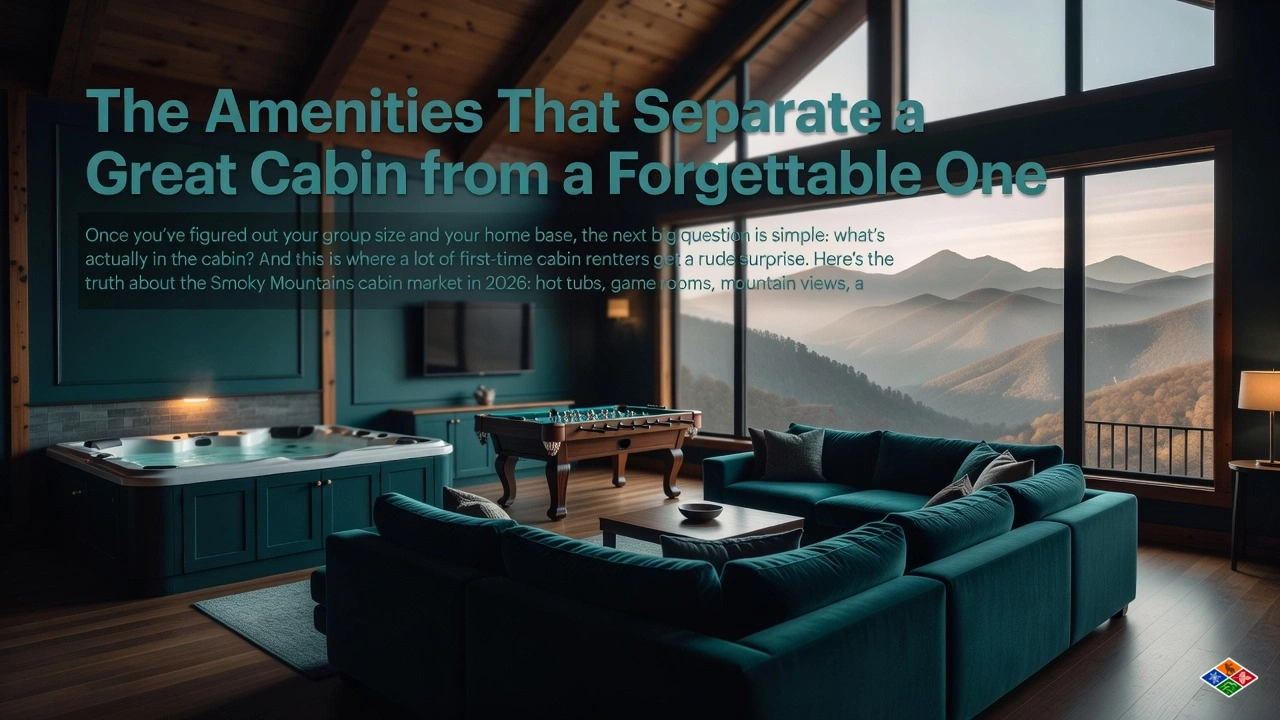
Once you’ve figured out your group size and your home base, the next big question is simple: what’s actually in the cabin? And this is where a lot of first-time cabin renters get a rude surprise.
Here’s the truth about the Smoky Mountains cabin market in 2026: hot tubs, game rooms, mountain views, and private decks are no longer special. With over 5,396 active cabin listings in the Pigeon Forge area alone, these features show up at price points starting under $200 a night. They’ve become the floor, not the ceiling. If a cabin is advertising a hot tub and a mountain view as its headline features, that’s basically the equivalent of a hotel bragging about free Wi-Fi. It’s expected. It’s not a reason to choose one cabin over another.
That shift matters a lot when you’re trying to figure out what you’re actually paying for. If hot tubs and decks are everywhere, then the real question becomes: what separates a cabin that delivers a genuinely memorable trip from one you forget about six weeks later?
The single amenity that consistently rises above the rest in this market is the private indoor heated pool, and the reason is straightforward: weather doesn’t touch it. The Smoky Mountains receive rainfall roughly 130 or more days per year. Winters bring freezing temperatures. A rainy Tuesday in October or a cold January morning doesn’t cancel your plans when your pool is inside. You swim when you want, at whatever hour you want, without checking the forecast. That’s a fundamentally different experience than crossing your fingers that the weather cooperates for your outdoor hot tub time.
This weather-independence is especially meaningful for groups traveling in the fall or winter, which are two of the most popular seasons in the Smokies. Fall foliage draws enormous crowds in October, and winter getaways are a real and growing segment of the market. An indoor pool means the luxury experience you paid for actually delivers, regardless of what’s happening outside.
Let’s talk numbers, because this is where a lot of guests are surprised in a good way. Private indoor pools add roughly $100 to $300 per night over comparable properties. Theater rooms add $50 to $100 per night. Game rooms add $25 to $75 per night. Those numbers sound significant until you do the per-person math.
A large cabin sleeping 16 to 18 guests with an indoor pool, theater room, and game room might run $650 to $700 per night. Split that across the group and you’re looking at roughly $38 to $45 per person, per night. That’s competitive with a basic hotel room rate, except instead of a standard room, each person gets exclusive access to a private pool, a theater, and a full game room that no other guests are sharing. No hotel in the Smoky Mountains offers that combination at any price point.
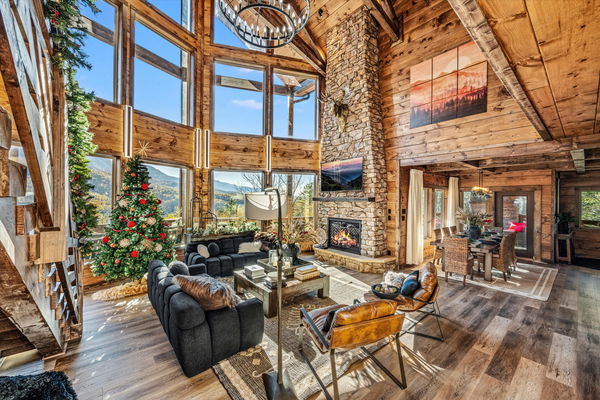
This is exactly the philosophy behind the cabin lineup at Elk Springs Resort. Rather than stacking up just the baseline amenities, these cabins layer in private indoor heated pools, theater rooms, and game rooms alongside private decks with mountain views and genuinely secluded settings near Gatlinburg. It’s a complete amenity stack that sits well above what the standard market offers, designed so that the experience holds up no matter the season, the weather, or what your group feels like doing on any given night.
Here’s the bigger market context worth knowing. With 57% of property managers expecting more competition in 2026, the Smokies cabin market is only getting more crowded at the standard tier. The properties competing on hot tubs and decks are essentially fighting over the same shrinking slice of price-sensitive guests. Meanwhile, the gap between a standard cabin and a true luxury cabin has quietly grown wider. And guests who experience that premium tier tend not to go back. Once your group has spent an evening in a private theater and then moved to an indoor pool while rain taps the windows outside, a cabin with just a hot tub starts to feel like a step backward. That’s not a marketing claim; it’s just what happens when expectations get recalibrated.
Timing your cabin trip to the Smokies well can mean the difference between snagging your dream luxury retreat and settling for whatever’s left. Here’s a clear breakdown of what to expect season by season, plus a few smart strategies most first-time visitors never think to use.
Spring and summer are the classic family seasons. School breaks, warm weather, and access to Great Smoky Mountains National Park trails all combine to fill up cabins fast. Summer is particularly competitive, with July sitting at the very top of the demand curve. If you’re targeting a popular week like July 4th or mid-July, you need to book 10 to 14 weeks in advance, according to current summer 2026 booking data from the Smokies market. Waiting until May to book a July cabin is a real gamble, especially for larger luxury properties with theater rooms, indoor pools, and game rooms. Those fill up first.
Fall foliage season, peaking in October, is the single highest-demand period of the entire year. Rates during this window run 30 to 60 percent above off-peak pricing, and the third and fourth weekends of October are especially intense. A cabin that costs $200 per night in January can easily run $350 to $450 during peak foliage. For fall foliage weekends, aim to book at least 8 to 12 weeks out. The seasonal booking guide for Smoky Mountain cabins confirms that this window consistently surprises first-timers who assume a few weeks’ notice is plenty.
Winter holidays bring a completely different crowd. Couples and families looking for snow-dusted mountain scenery, warm fireplaces, and cozy cabin experiences make Christmas through New Year’s one of the year’s busiest stretches. Demand rivals fall foliage season, so early planning is just as critical.
January and February flip the script entirely. These two months represent the deepest value window in the Smokies calendar, with some properties running 40 to 50 percent below peak rates. If your schedule is flexible and you’re not chasing a specific event, a mid-week January stay can be remarkably affordable, especially for larger cabins where the nightly cost split across your group becomes genuinely hard to beat.
Here’s a piece of intel that most first-time Smokies visitors never discover until their second or third trip: September is arguably the smartest month to visit. The weather is dry, high-elevation foliage starts turning earlier than most people expect, and rates run 20 to 30 percent below the October peak. You get most of the fall beauty, far better availability, and meaningful savings, all at the same time. For a luxury cabin with an indoor heated pool and mountain views, that rate difference can add up to hundreds of dollars over a week-long stay. September genuinely earns its reputation as the hidden-gem window for Smokies travelers who do their homework.
If your schedule has any flexibility at all, shifting your stay to Sunday through Thursday can save you 15 to 25 percent compared to the exact same cabin on a Friday and Saturday night. That’s not a small number. On a luxury cabin running $600 per night on a weekend, a mid-week stay at the same property might run $450 to $500. Arriving Sunday and departing Thursday captures most of the experience without the peak weekend pricing. It’s one of the most underused savings strategies in the entire cabin booking process.
Early booking momentum in the Smokies is accelerating. Cabin owners were already fielding summer 2026 inquiries as far back as mid-2025, with community discussions among Smokies cabin owners confirming that desirable properties were being reserved nearly a full year ahead of travel dates. One owner’s advice summed it up well: “If you find something you really like, I wouldn’t sleep on it.” For larger luxury cabins with premium amenities, the availability risk of waiting until the last minute is real. The fallback is not just a different cabin; it’s often a smaller, less-equipped property in a less desirable location.
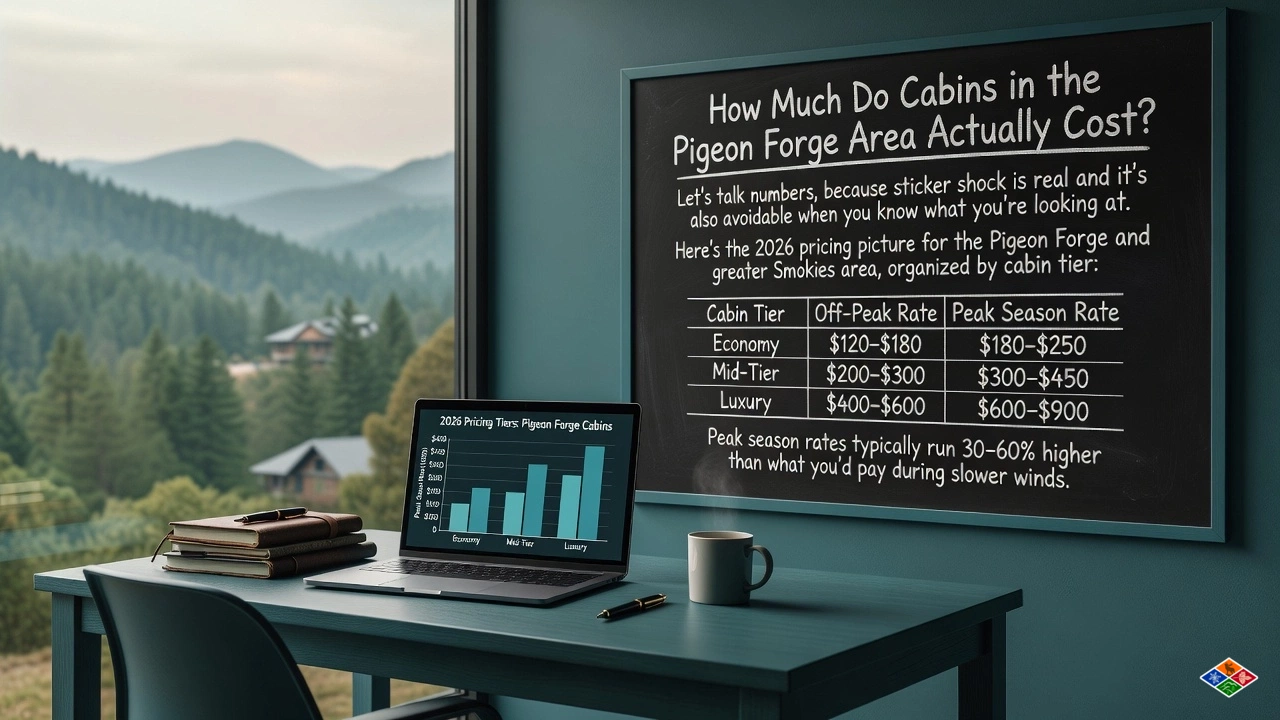
Let’s talk numbers, because sticker shock is real and it’s also avoidable when you know what you’re looking at.
Here’s the 2026 pricing picture for the Pigeon Forge and greater Smokies area, organized by cabin tier:
Peak season rates typically run 30–60% higher than what you’d pay during slower windows like January or February. That’s not a small difference, so knowing your flexibility on travel dates genuinely matters when you’re budgeting.
Now here’s where pricing jumps in a way that surprises some guests but actually makes a lot of sense once you understand what you’re getting. A 3–5 bedroom cabin with a private indoor heated pool runs roughly $450–$650/night off-peak and $600–$900 or more per night during peak season.
That premium exists for a reason. An indoor pool is completely weather-proof, which in the mountains is a bigger deal than it sounds. Rain, cold snaps, and foggy days are part of Smokies life, and an indoor pool means your group never loses that centerpiece experience regardless of what’s happening outside. Layer in a theater room, a game room, and panoramic mountain views, and you’re looking at a full resort-quality experience inside the cabin itself.
Bedroom count is just the starting point. What really drives the nightly rate includes the quality of the mountain views, how secluded the property is, proximity to attractions and the National Park, whether the pool is indoor or outdoor, the entertainment room setup, and the reputation of the management company behind the property. Two 4-bedroom cabins in the same ZIP code can differ by $150 per night based entirely on these factors.
For context, the U.S. average daily rate for vacation rentals held steady at $321 in H1 2025. That benchmark matters because it tells you Smokies pricing isn’t some inflated regional quirk. It’s a direct reflection of real amenity value in a highly competitive market. You can browse Pigeon Forge cabin rentals starting at various price points to get a feel for how the tiers look in practice.
Here’s the mental shift that changes everything. A $400/night cabin sleeping 10 people costs $40 per person per night. That’s often less than a single hotel room, with none of the cramped hallway-and-elevator experience and all of the shared living space, full kitchen, and private amenities. When you run that math, the luxury pool cabins start looking less like a splurge and more like the obvious choice for groups.
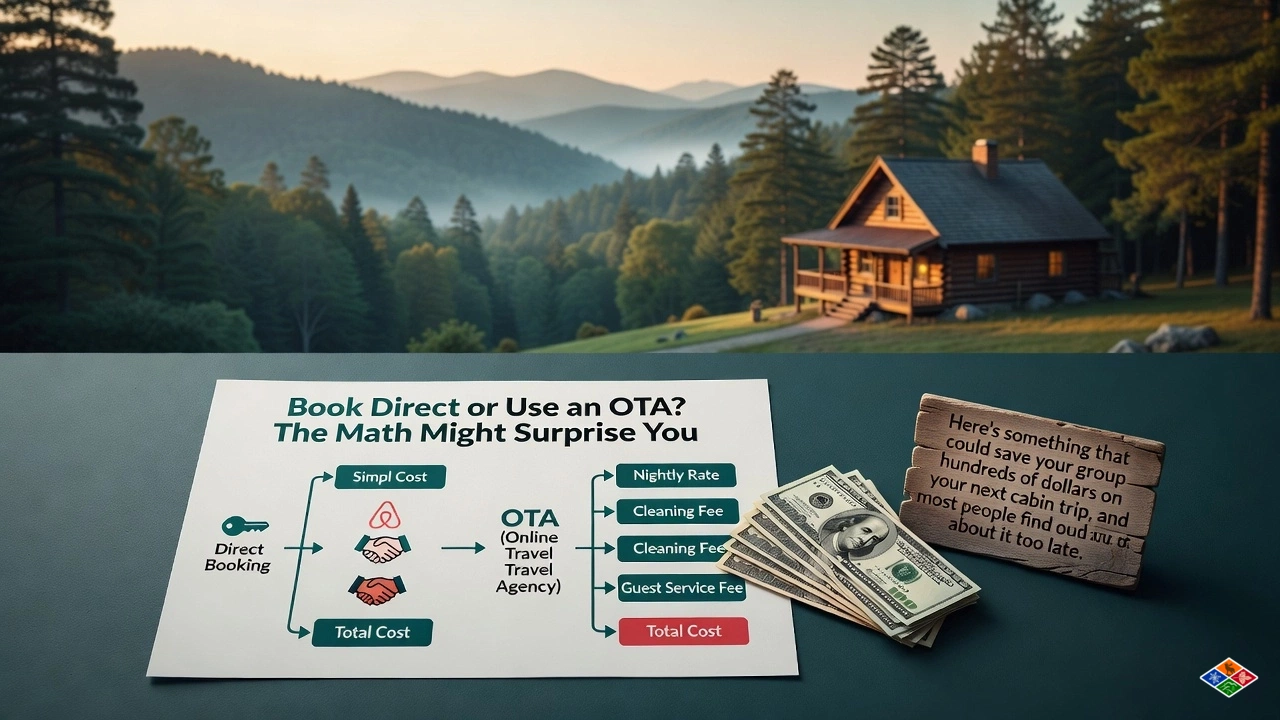
Here’s something that could save your group hundreds of dollars on your next cabin trip, and most people find out about it too late.
When you book a cabin through a platform like Vrbo or Airbnb, you’re not just paying the nightly rate and a cleaning fee. You’re also paying a guest service fee that typically runs anywhere from 12 to 16 percent of your subtotal, tacked on right at checkout. These platforms are businesses, and their service fee is how they keep the lights on. It sounds reasonable in the abstract, but on a large group cabin booking, the math gets painful fast.
On a group cabin running $4,000 or more per week (which is very normal for a 6 to 9 bedroom luxury cabin in the Smokies), the OTA service fee alone can exceed $600. That’s $600 on top of the nightly rate, on top of the cleaning fee, on top of taxes. Compare that to booking the exact same cabin directly with the property management company, and most guests save between $200 and $450 on a standard 7-night stay. For a family reunion or a group of friends splitting costs, that’s real money back in everyone’s pockets.
The savings are the headline, but they’re not the whole story. Booking directly with a property manager also gives you access to things no OTA can offer. You get a real person to talk to before, during, and after your stay, not a support ticket queue. You often get more flexible payment options, returning-guest discounts, and loyalty pricing. And if something goes wrong during your trip (a hot tub issue, a late checkout request, anything), you’re working directly with the people who manage the property rather than waiting on a third-party platform to mediate.
Elk Springs Resort handles all of this through their direct booking channel at elkspringsresort.com, where the full cabin inventory is available without the OTA fee layer stacked on top. Their lineup spans 1 to 9 bedroom luxury cabins with amenities like indoor heated pools, theater rooms, and game rooms, so the selection is there whether you’re planning a couples retreat or a full group getaway.
Here’s the broader takeaway, regardless of which property you end up booking. Before you finalize any reservation through a third-party platform, take 60 seconds to search for the property or management company’s direct website. Many vacation rental by owner options in Gatlinburg make this easy to find. Compare the total checkout price on both channels, including all fees, and then decide. More often than not, the direct channel wins on price and on service.
Let’s be honest: a lot of destinations get called “world-class” without really earning it. The Smokies have earned it.
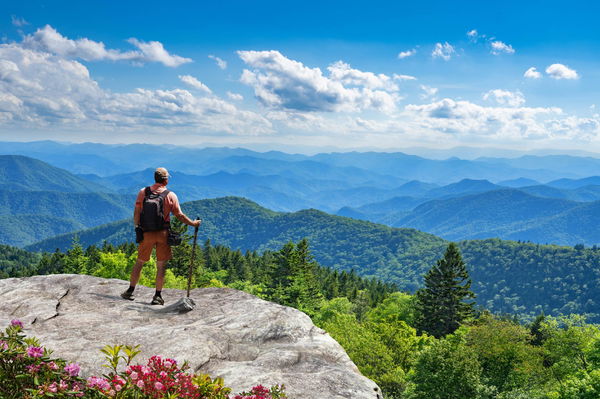
Great Smoky Mountains National Park draws over 12 million visitors every single year, making it the most visited national park in the entire country, ahead of Yellowstone, the Grand Canyon, and every other park on the list. Part of what makes that number so remarkable is that the park charges zero entrance fee, meaning the ancient Appalachian ridgelines, old-growth forests bursting with wildflowers each spring, and cascading waterfalls like Laurel Falls and Rainbow Falls are accessible to anyone who shows up. The trails range from flat, easy walks to full-day summit climbs, so there’s genuinely something for every fitness level in your group.
One of the most memorable parts of a Smokies trip for many guests is something no brochure can fully prepare you for: seeing a black bear in the wild. The park is home to an estimated 1,500 black bears, and sightings are a real, regular occurrence rather than a lucky outlier. Guests staying in cabins near the park boundary have solid odds of wildlife encounters, especially during dawn and dusk drives along scenic routes like Roaring Fork Motor Nature Trail. It’s the kind of moment that gets talked about for years.
If you’re visiting in October, prepare yourself for fall foliage that earns its reputation. The Smokies deliver one of the most dramatic and accessible leaf-peeping experiences in the entire eastern United States. Color starts at the high elevations first, then slowly sweeps down into the valley towns over a three to four week window, meaning the show keeps evolving throughout the month no matter when you arrive.
The region surrounding the park is a legitimate multi-activity destination, not a one-trick attraction. Beyond hiking, you can do whitewater rafting on the Pigeon River, zip-lining above the tree canopy, fly fishing across roughly 2,900 miles of streams that protect some of the last wild trout habitat in the eastern U.S., mountain biking, and waterfall hikes that visitors consistently describe as trip highlights. Free ranger-led events run through the summer months as well, including lantern-lit waterfall hikes and wildlife programs.
What ties all of it together is having the right home base. Spending a full day on the trails and then coming back to a private luxury cabin with an indoor heated pool and a theater room is a completely different experience than returning to a hotel room. That combination, total immersion in the outdoors paired with genuine comfort and privacy at the end of the day, is exactly why so many guests who visit once end up coming back every single year.
You’ve now got everything you need to make a smart cabin decision. Know the difference between Pigeon Forge and Gatlinburg, use the two-guests-per-bedroom rule to nail your cabin size, prioritize weather-proof amenities like indoor heated pools so a rainy afternoon never derails your trip, aim for September or mid-week stays to stretch your budget, and always check for a direct booking option before defaulting to an OTA.
If you’re ready to take the next step, Elk Springs Resort checks every one of those boxes. With luxury cabins ranging from 1 to 9 bedrooms, tucked into the mountains of Gatlinburg and just 15 minutes from Pigeon Forge, it sits closer to the National Park than most Pigeon Forge properties and delivers amenities that go well beyond the basics. Think indoor heated pools, theater rooms, game rooms, and sweeping mountain views. You can book directly at elkspringsresort.com and skip the OTA fees entirely.
One practical note worth keeping in mind: industry reports point to strong forward bookings heading into 2026, and peak summer dates have been filling up 10 to 14 weeks out. Waiting until the last minute is a gamble that rarely pays off in the Smokies.
The mountains are not going anywhere, but the best cabins do fill up fast. Your basecamp is out there. Go find it.
Booking the perfect cabin in Pigeon Forge does not have to be stressful. By choosing the right size for your group, prioritizing the amenities that matter most to you, understanding the layout of the Smoky Mountains region, and reading the fine print before booking, you can set yourself up for a truly unforgettable getaway.
The Smoky Mountains are waiting, and your dream cabin retreat is closer than you think. Start by making a list of your must-haves, compare a few properties side by side, and do not be afraid to reach out to rental companies with questions before committing.
Your perfect mountain escape is out there. Take what you have learned here, book with confidence, and get ready to create memories that will bring you back to Pigeon Forge year after year.
 Promo codes for Smoky Mountain Cabins
 Best Pet-Friendly Cabins in Wears Valley
 Gatlinburg Cabin Guide: How to Choose the Perfect Smoky Mountain Getaway
 How to find a Luxury Cabin in Gatlinburg, TN
 Guide to Backpacking in the Smoky Mountains: 8 Top Trails
 10 Reasons a Luxury Log Cabin in the Smoky Mountains Is Worth It
